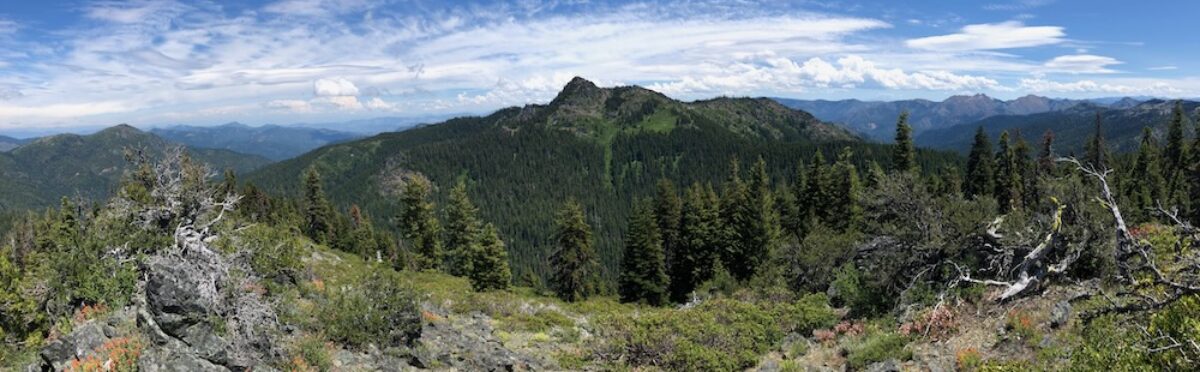
The Forest Service is proposing a massive project on the Siskiyou Crest, the Yellowjacket Project, that could result in 7-14 different timber sales, at mid to high elevations, across the headwaters of the Applegate River, including old-growth forests.
We will discuss the Yellowjacket Project in detail below, but first, a little bit of background about how it came about. TAKE ACTION at the end of this blog! We may not have much time to comment after their shortened Environmental Analysis comes out, so COMMENT NOW!
Emergency Situation Determinations (ESD) are being used to fast-track logging of public forests
In April 2025, Secretary of Agriculture Brook Rollins issued a Secretarial Memo aimed at increasing timber production on National Forest lands. The agency did so by placing over 112 million acres, approximately 58% of our National Forest lands, including all of the Rogue River-Siskiyou National Forest under an “Emergency Situation Determination” or ESD.
ESDs were intended to address urgent, sudden, or unforeseen threats to public safety or natural resources, but they are now being used to approve large logging projects on federal lands where no urgent threat exists. The intent is to fast-track timber extraction, bypass traditional environmental analysis, cut out public involvement opportunities, reduce transparency, eliminate standard public comment periods, eliminate objection processes, and expedite logging projects on public lands, including the Klamath-Siskiyou Mountains.
Currently, National Forest Ranger Districts across the West are implementing increasingly large and damaging timber sales with increasingly little to no public involvement, little environmental analysis, and virtually no limits on the scope, scale or intensity of logging that can be proposed under ESD timber sales.
For example, in Northern California the Shasta-Trinity and Klamath National Forests are both proposing and authorizing large, landscape scale logging projects throughout wild, rugged and remote lands on the Klamath and Trinity Rivers. These large scale timber grabs propose logging tens of thousands of acres, including Endangered Species habitats, mature, late successional and old-growth forests, forests adjacent to communities, forests above Wild and Scenic Rivers, and forests in backcountry habitats.
These projects are being proposed with only a handful of pages of cursory, non-site-specific analysis, a list of Project Design Features (PDFs) to implement, and perhaps a few relatively low-resolution maps, yet they will have long-lasting consequences for the environment across vast swaths of public land.
This is classic, shortsighted Trump Administration policy: declare a national emergency, implement activities without regulatory burden, public oversight, transparency, or accountability, and then use a federal agency you just gutted into submission with mass firings and extreme budget cuts to implement your damaging and unpopular policy.
As usual, this would create massive and immediate profits for industry and monied interests, at a pace that is altogether unsustainable, extremely damaging to the environment, detrimental to the broader public interest, damaging to the surrounding community’s quality of life, and damaging to the agency that is now unpopular for its policy of caving to industry and the administration’s demands to log, mine, graze, or otherwise degrade our public lands for private profits. It is a sad state of affairs on our public lands under the Trump Administration.
The Yellowjacket Project
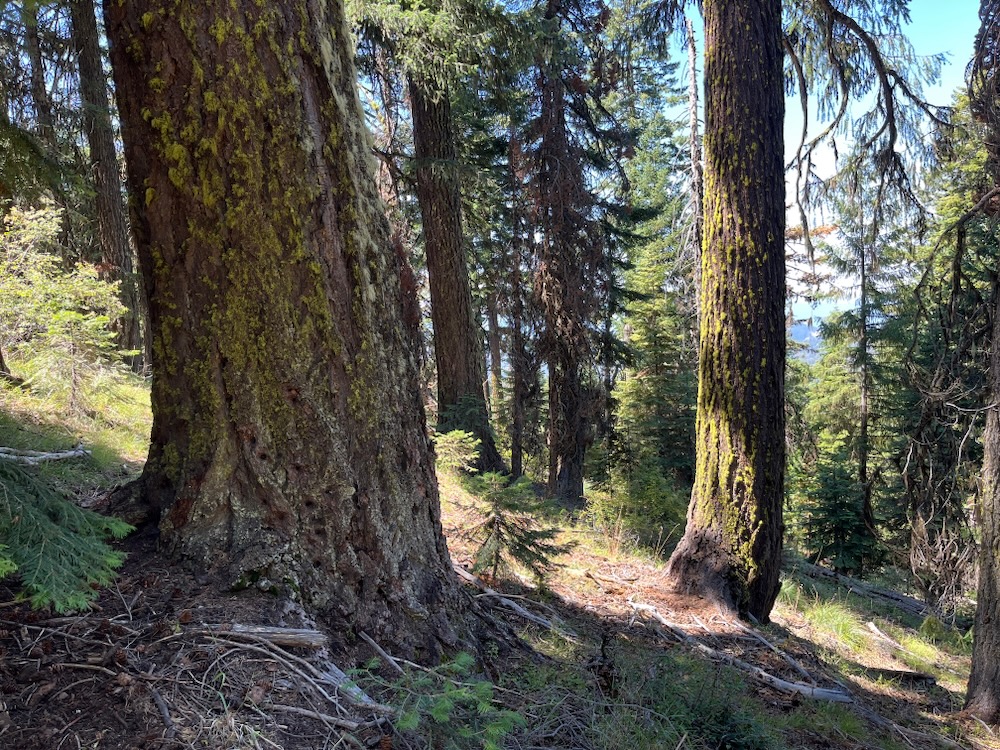
Unfortunately, the Rogue River-Siskiyou National Forest has proposed its first ESD timber sale on the Siskiyou Crest and in a very large portion of the Applegate River Watershed and in the Applegate Adaptive Management Area (AMA), which was designated specifically to facilitate community-based collaboration. Limiting public-facing analysis and reducing public involvement opportunities through the use of an ESD is not consistent with the mandates of the AMA, the National Environmental Policy Act, or the expectations of the public when managing their public lands.
The timber sale project, called theYellowjacket Project, covers thousands of acres of Applegate forests on the western face of Wagner Butte, on Glade Creek, Yale Creek, Crepsy Gulch, Center Ridge and across the headwaters of the Little Applegate River. It also includes Te’el Creek in the Upper Applegate River watershed, along Elliott Ridge, Yellowjacket Ridge and on the slopes of Acorn Woman Mountain above Acorn Woman Lake.
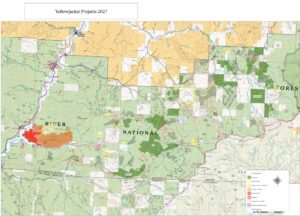
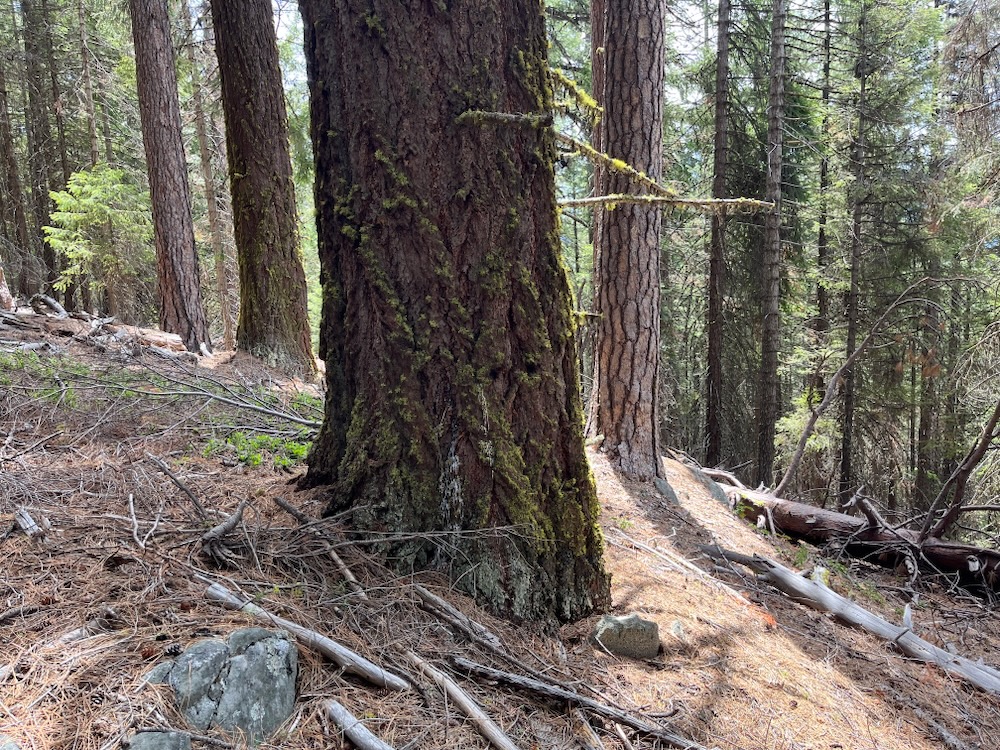
Sprawling across much of the eastern Applegate River watershed, the commercial logging proposed in this project has the potential to permanently damage the forests, scenic viewsheds, habitat values, wildfire resilience, and watershed values of the region. Recent field monitoring has validated these concerns as we are finding mature, late successional and old-growth forests targeted for logging throughout the timber sale area.
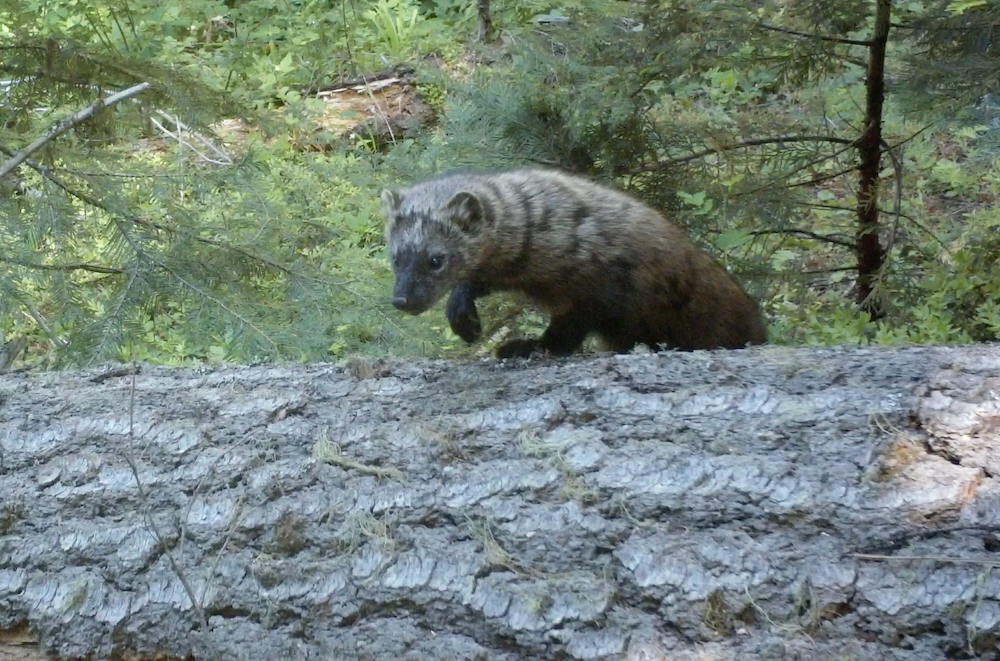
This includes old forest habitat on the western slope of Wagner Butte, near the Wagner Butte Trailhead, near the Wagner Butte Trail, on Center Ridge, at the headwaters of the Little Applegate River, and on Greeley Creek, where we have documented Pacific fisher utilizing the proposed logging units.
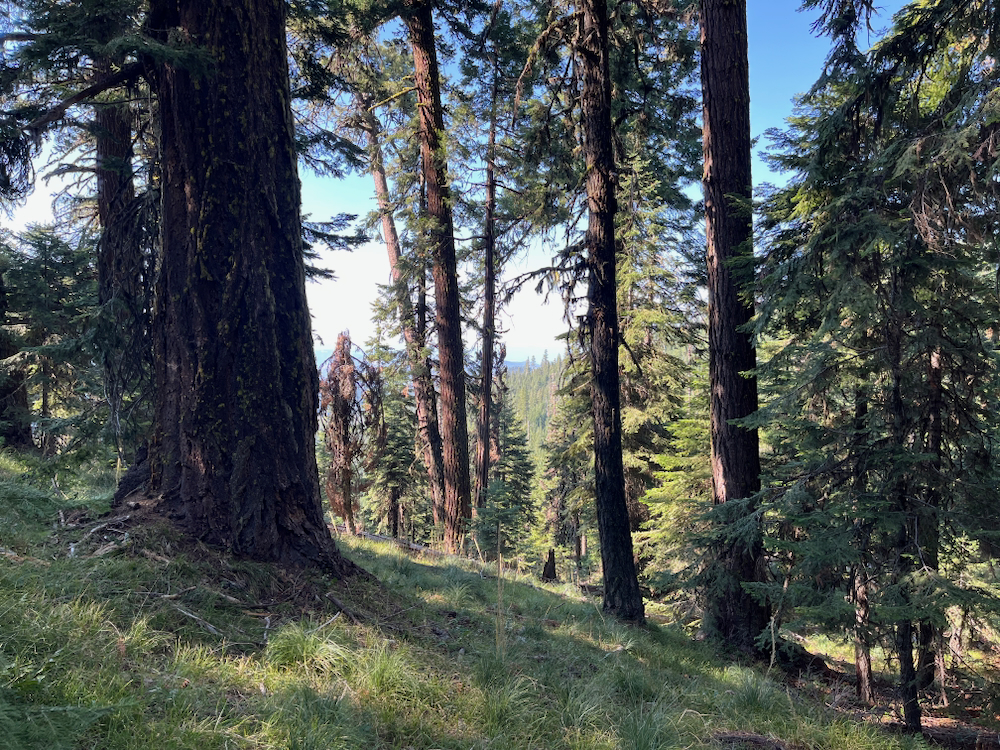
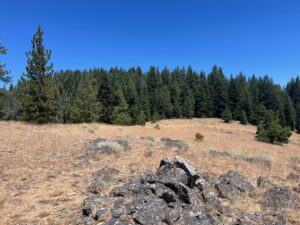
Additional commercial logging units have been identified in the beautiful, old-growth forests on the northern slope of Yellowjacket Ridge. At over 5,500 feet in elevation, this area has open forests of Jeffrey pine and Douglas fir that mingle with closed stands of white fir, small mountain meadows and rocky serpentine outcrops.
These old, complex stands are important as climate refugia, for their natural fire resilience, for the biodiversity they sustain, for the unique wildlife they support, and as intact habitats with exceptional biological values. We are concerned that they have been included in the Yellowjacket Project, are proposed for commercial logging, and will be heavily impacted if that logging actually occurs.
The large tree and canopy reduction logging operations often authorized in public land timber sales can leave stands deficient in structural complexity. By diminishing canopy cover, large tree density, snag habitats, coarse downed wood, and in lower elevations important hardwood components, these forest will take potentially centuries to recover. The removal of large trees and the massive reduction in canopy would make these forests less fire resilient by increasing dense, even-aged understory growth and fuel loading, and by altering microclimates significantly towards, hotter, drier, more windy environments with potential for far more active fire behavior during wildfire event.
The Forest Service is also proposing to implement widespread roadside logging of “dead and dying” trees for up to 500’ from nearly all major National Forest roads in the vast planning area in the headwaters of the Little Applegate River and upper Te’el Creek. Using the same disastrous assumptions that the Medford District BLM has used to devastate living forests in the SOS Project, the Boaz Salvage Timber Sale, the Forest Creek Timber Sale and the Lickety Split Timber Sale in the Applegate Valley, the Forest Service is targeting significant acreage under these linear roadside logging prescriptions.
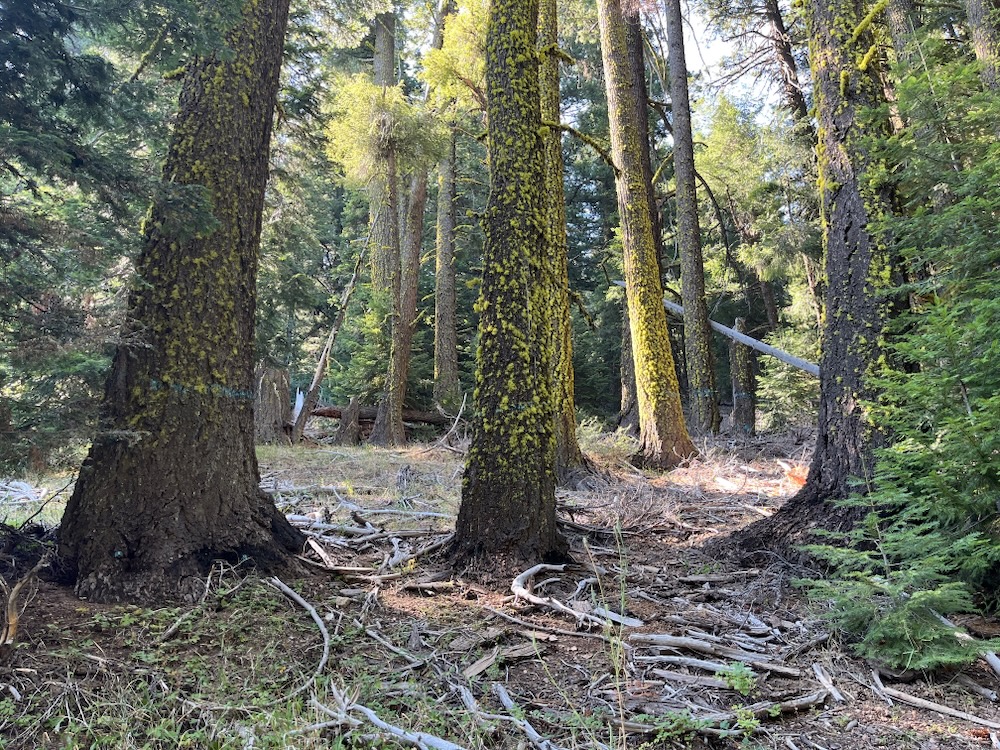
These logging prescriptions are not only damaging to the land, but they would be misapplied in forest types and habitats where no so-called “Douglas fir decline spiral” currently exists, where the risk of such a mortality outbreak is relatively low, and where stands are dominated or co-dominated by species other than Douglas fir.
Similar roadside “dead and dying” logging prescriptions have been implemented as heavy industrial and clearcut logging on nearby BLM lands. In the Yellowjacket Project this logging would impact old, intact, living forests, habitats with minimal recent mortality, and highly diverse landscapes that currently represent climate refugia, sustain high levels of biodiversity, and provide important habitat connectivity.
According to agency staff, this project could produce between 7 and 14 large timber sales, depending on what is ultimately approved and what units are ultimately moved forward into a final decision. This level of harvest, combined with the current BLM logging frenzy in the foothills of the Applegate would permanently alter our beautiful watershed and dramatically increase fire risks in the mountains that surround our communities.
Prescribed fire would better meet the agency’s fuel reduction goals and ASA supports the burn blocks proposed east of Applegate Reservoir in the Yellowjacket Project.
Currently, the Forest Service appears unsure as to whether it will provide the public with adequate comment opportunity on the Yellowjacket Project. They have said they may not provide a comment period at all, and if they do it might not even be a 30 day comment period. This unwillingness to commit to the typical 30-60-day comment period is unacceptable for a project of this size and scale in high profile areas on the Siskiyou Crest. The Forest Service is also saying the analysis for this massive, sprawling timber sale, that includes much of the Siskiyou Mountains Ranger District, will be capped at a paltry 15 pages, meaning virtually none of the relevant issues will be properly considered or analyzed in the upcoming Environmental Analysis (EA).
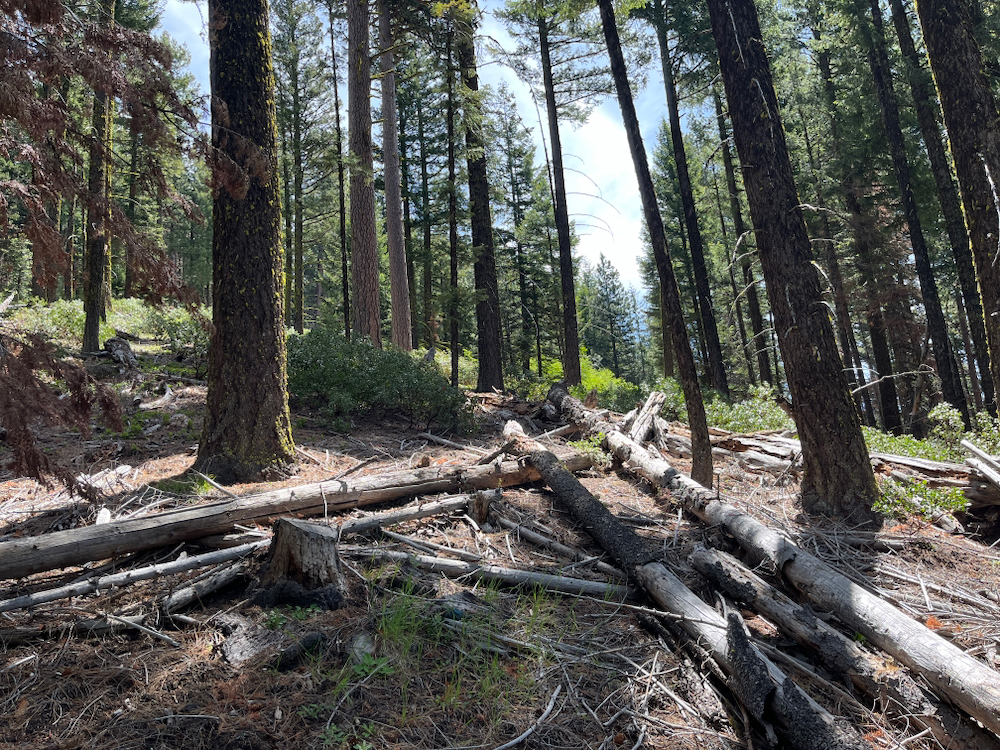
The Rogue River-Siskiyou National Forest is currently in the process of planning one of the largest Applegate Valley timber sales in many decades, and they are being pushed by the administration in DC to log off our public lands without properly considering the impacts, providing meaningful public involvement, or public comment opportunities.
Our forests, our wildlands, and our communities deserve better, and what is being lost simply cannot be restored. It’s now or never on our public lands. The last uncut forests, wild rivers, and scenic mountain ranges are being offered to extractive industries for logging, mining, gas drilling and other forms of development. It’s time for the public to push back on both a national and local scale, and demand that these lands be managed for both the public interest and future generations, not short-term profits that leave our communities, watersheds, and forests less resilient, less vibrant, less livable, and less beautiful.
Although the Rogue River-Siskiyou National Forest may or may not be offering a public comment period for this vast and important project, they have indicated they are open to receiving comments and incorporating them into the public record for the Yellowjacket Project. We encourage you to send them an email now with your comments on the Yellowjacket Project.
We also hope they are willing to alter this project, cancel the mature, late successional and old-growth units, build no new roads, and focus on management that serves, rather than harms the public interest in these spectacular public lands.
With this in mind, we are initiating our own public comment period and encouraging people who care about the public forests of the Siskiyou Crest to reach out to Forest Service officials and demand that they protect our last old forests, and implement management activities that will make our forests more, not less healthy, resilient and biologically diverse.
Take Action
Click the button below to send a letter to Rogue River-Siskiyou National Forest Supervisor Molly Juillerat, Rogue River-Siskiyou National Forest Deputy Supervisor Paul Simas, U.S. Senator Ron Wyden, and U.S. Senator Jeff Merkley, asking the Forest Service to provide a thorough Environmental Analysis of this massive logging project, a full 30-60-day comment period, and NO logging of mature and old-growth forests.
A 15-page Environmental Analysis and shortened comment period is not acceptable for this size of a project on our public lands!
Or you can send a personal email to Forest Service and elected officials:
Send an email to Rogue-River Siskiyou National Forest Supervisor Molly Jullierat at molly.juillerat@usda.gov
Send an email to Senator Ron Wyden here. (Click “Share Your Opinion”)
Send an email to Senator Jeff Merkley here.
Talking Points for Your Public Comment
- The Emergency Situation Declaration (ESD) is inappropriate. There is no credible emergency and no excuse for cutting public comment and scientific analysis out of the process.
- The Forest Service must conduct a thorough and well-developed Environmental Analysis that provides extensive site-specific information, the disclosure of project level and cumulative impacts, and a backing in credible science.
- Provide a full 30-60-day public comment period on the Environmental Analysis.
- Remove all mature, late successional and old growth forests from the commercial timber sale area withdrawing the following units near Wagner Butte, Center Ridge, the headwaters of the Little Applegate River and on Yellowjacket Ridge. Unit 270, 278, 281, 282, 283 and 284 near Wagner Butte, unit 300 on Yellowjacket Mountain, and the mature forest portions of unit 274 above the Little Applegte River.
- Cancel all logging units in Nesting, Roosting and Foraging habitat for the northern spotted owl and all logging proposed in Riparian Reserves.
- Maintain all dispersal habitat for the northern spotted owl and implement treatments that will help develop late successional habitats.
- Focus thinning treatments only in plantations and young stands with a history of industrial logging. Repair the damage from previous clearcut, high-grade, and industrial overstory logging practices, and do not create new industrial logging impacts in previously unentered land.
- Large, overstory trees and complex forest are deficient throughout the planning area due to historic logging. Retain all large trees over 20” diameter throughout the planning area. This will ensure that adequate large living trees, canopy cover, current stand complexity, and future snag and downed wood recruitment is maintained.
- Retain a minimum of 50% canopy cover in logging units to reduce the aggressive understory woody fuel and fine fuel response associated with gap creation and canopy cover reduction.
- Build no new roads (temporary or permanent) and no new log landings.
- Do not implement so-called “dead and dying” salvage logging. The practice is environmentally damaging and inappropriate in the planning area. No significant flatheaded fir borer mortality has occurred in the planning area
- Cancel all roadside dead and dying salvage units and implement only true hazard tree removal along well used BLM roads.
- Support the Forest Service’s large prescribed fire units or “burn blocks” east of Applegate Reservoir in the project.