The East Applegate Ridge Trail is a beloved and threatened community asset
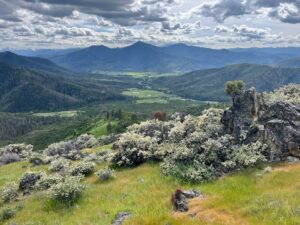
For many years residents in southwest Oregon have coalesced around a vision of long-distance, non-motorized trails extending across the Applegate River watershed and connecting communities throughout the Rogue River, Bear Creek and Applegate River Valleys of interior southwest Oregon. These residents have also built multiple organizations dedicated to building these trail systems with the ultimate goal being to link the proposed Applegate Ridge Trail and Jack-Ash Trail systems into the larger, approximately 80-mile Siskiyou Skyline Trail. The trail would extend from Grants Pass to Ashland, Oregon throughout the beautiful Applegate foothills and small portions have already been created.
Yet, since construction of the East Applegate Ridge Trail by the Applegate Trails Association (ATA) and the Jack-Ash Trail by the Siskiyou Upland Trails Association (SUTA) in 2017, residents in the area are just now realizing how vital, transformative, and popular this proposed trail system could be.
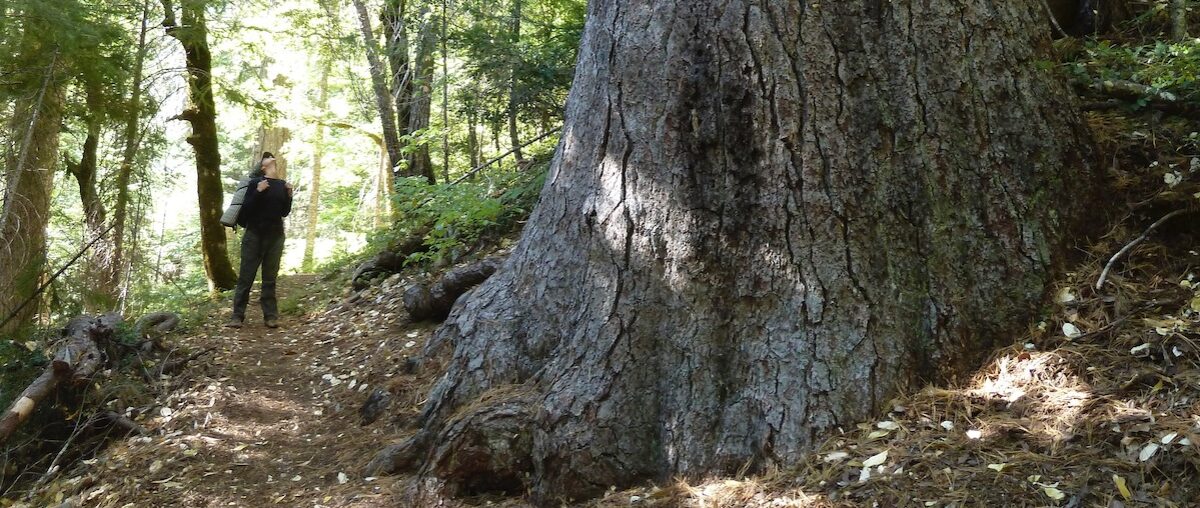
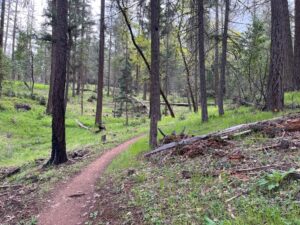
The East Applegate Ridge Trail now attracts thousands of visitors to trailheads in the Applegate Valley each year, and is just a ten-minute drive from Jacksonville at the edge of the Rogue Valley. The trail system is one of the most accessible, scenic, spectacular, and beloved trails in the region. This now iconic Oregon trail contains a beautiful mixture of oak woodland, thickets of chaparral, open grasslands, mixed hardwood forests, mature conifer forests, relatively undisturbed habitats, and colorful wildflower displays.
The area is also cherished for its incredible views across the Applegate Valley, the region’s rugged foothills, and the long, east-west tending spine of the Siskiyou Crest at the headwaters of the Applegate River. It is also popular with hikers, botanists, trail runners, and mountain bikers throughout the region and beyond.
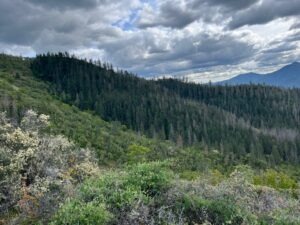
The East Applegate Ridge Trail provides our region with a sense of pride in both the beauty of this place, and in the local community that has worked so hard to envision, promote, gain BLM approval, build, and maintain this incredible non-motorized trail.
Unfortunately, both the trail’s scenic beauty and the massive community effort that led to the trail’s creation are threatened with BLM logging under the Holcomb Hollow Timber Sale, and this logging could begin any day.
The Holcomb Hollow Timber Sale is damaging to the environment
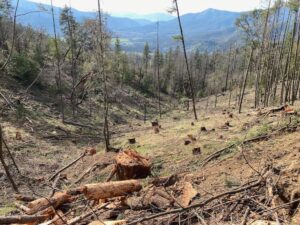
The Holcomb Hollow Timber Sale is a 679-acre timber sale authorized by the BLM under their disastrous Ashland 2025 SOS logging project. Thus far, the Holcomb Hollow Timber Sale has logged the western face of Woodrat Mountain doing great damage to the area’s forests and woodlands. This sale also includes logging units, which have not yet been implemented, on BLM lands in the Sterling Creek area, and in multiple locations along the East Applegate Ridge Trail.
The East Applegate Ridge Trail would be heavily impacted by BLM logging
Although the BLM claims to be logging only “dead and dying” trees in the SOS project and Holcomb Hollow Timber Sale, numerous units proposed for logging contain living, green stands with mature forest canopy. A deeper dive into the timber sale’s tree removal mark also shows that many large, living, fire resilient trees that survived recent beetle mortality outbreaks are now being proposed for removal. In fact, the BLM’s own analysis shows that some stands being proposed for logging sustained as little as 10% mortality. Yet, the Holcomb Hollow Timber Sale Prospectus reveals that 73% of the trees in these stands would be removed.
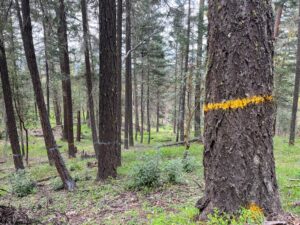
Although the agency claims to be using a scalpel to selectively harvest only the most unhealthy trees, and those most likely to die, the actual outcome and on-the-ground results of the Holcomb Hollow Timber Sale has included the removal of mature, living forest canopy, large fire resistant trees, habitat rich snags, and virtually everything in between.
For example, the SOS Project claimed to “promote hardwoods,” and the Holcomb Hollow Timber Sale Prospectus “reserved” them from timber harvest; however, hardwoods have been systematically removed across hundreds of acres in both the Holcomb Hollow and nearby Apple Saws Timber Sales, leaving a few scattered, often badly damaged trees per acre in some locations, and virtually none in others.
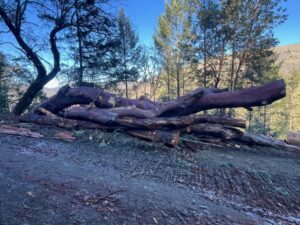
Logging off these hardwoods, and the living, resilient conifers that survived the recent beetle mortality events in the Applegate River watershed has significant unanalyzed impacts, and creates fundamentally different outcomes than those disclosed in the BLM’s Environmental Assessment or authorized in its Decision Record.
The logging proposed along the East Applegate Ridge Trail would heavily degrade the recreational experience by logging off some of the only forested habitats traversed by the trail, and many of the forests in the trail’s immediate viewshed. The project would log stands to as low as 5-20% canopy cover, leaving a few scattered trees where living, green forests once stood. It would also eliminate the only real shade along the trail, and along this otherwise sunbaked ridgeline.
The area also supports populations of the great grey owl, which nests in conifer stands within the area. Significant effort was made during the creation of the East Applegate Ridge Trail to avoid impacts to these great grey owl habitats. Now these same mature conifer forests are being proposed for heavy industrial logging with potentially long-term impacts to this important nesting habitat.
Additionally, the controversial Bear Grub Timber Sale was proposed a number of years ago by the BLM, in the same immediate location. Yet the Bear Grub Timber Sale was canceled, in part, due to impacts to the rare Pacific fisher, and its old forest habitat. Now BLM has proposed to log these same stands, but with much more intensity, creating more damaging impacts to Pacific fisher denning habitats .
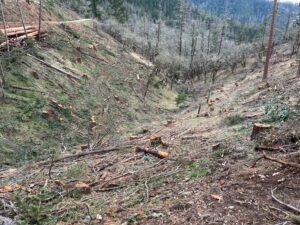
The timber sale also includes both cable yarding units in the viewshed of the trail, where currently green forests will be heavily logged and streaked with vertical cable yarding scars. This form of yarding tears up forest soils as the trees are repeatedly dragged uphill on steep mountain slopes and in long vertical corridors. Often the BLM requires one end log suspension, which allows the other end to scrape and drag across the forest floor. This creates long, vertical strips of heavily disturbed soil, significant soil compaction, soil displacement, and erosion that can create small gullies that channelize water and have been documented to contribute to debris flows and slope failures.
The units directly adjacent to the trail would be subjected to ground-based yarding where large tractors drag logs across forest soils, destroying the spectacular native wildflowers the trail is known for, gauging deep into forests soils, creating widespread soil compaction, extensive soil disturbance and often a conversion from native understory species to highly flammable non-native annual grasses and noxious weeds. Disturbance from equipment use and the degradation of native plant habitat is a significant impact along the East Applegate Ridge Trail, which is loved for its abundant native wildflower displays and high quality pollinator habitats.
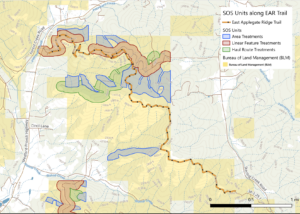
The scars of Holcomb Hollow Timber Sale will also damage the scenic viewsheds and the quality of both the environment and recreational experience directly adjacent to the trail. Especially, for the first two and a half miles, east from Highway 238, significant damage will be done.
Not only will the first half mile of the trail be converted from a trail on an old, gated, overgrown roadbed to a full blown timber haul road, but landings would also be created, large soil sterilizing machine slash piles would be built and later burned, and the surrounding forests heavily logged. The first two miles of now scenic mountain canyon would be riddled with logging units devouring each major stand of conifer forest, including those with both minimal and relatively significant recent tree mortality.
Additionally, approximately 1/4 mile of trail would run directly through unit 13-2, which would log off the trail and the surrounding ridgeline. Meanwhile the BLM would log straight to the trail in unit 11-1, 13-4 and 13-5.
Please contact BLM and let them know you love the East Applegate Ridge Trail and do not want to see it logged!
You can sign onto a quick letter and send it to elected officials and BLM land managers here.
Please add into the letter that you want to see the logging along the East Applegate Ridge Trail CANCELLED!
Better yet, send the BLM a personalized message extolling your love for the unlogged East Applegate Ridge Trail and your desire to see the Holcomb Hollow Timber Sale canceled.
Medford District BLM Field Manager, Elizabeth Burghard:
eburghar@blm.gov
Ashland Resource Area Manager, Lauren Brown
lpbrown@blm.gov
Which do you prefer on your favorite local hiking trail?
Relatively natural forests and intact plant communities?
Or… heavily logged and disturbed landscapes impacted by BLM timber sale operations?