The BLM’s latest in a slew of timber sales focused on the Applegate is called the Douglas Fir Mortality Complex Project. And there are even more logging projects on the horizon!
The Medford District BLM has been proposing increasingly large and damaging timber sales in the Applegate Valley, and the region many of us know and love is about to change forever. That is unless we organize and protect our BLM forests!
If the BLM had it their way, they would log off every living, green forest they could get their hands on, and if unchecked the series of timber sales currently proposed would log much of the mature forest remaining on BLM lands in the eastern Applegate Valley.
Currently, the BLM has either sold, or will soon auction off timber sales in portions of Sterling Creek, on the East Applegate Ridge Trail, and on the face of Woodrat Mountain in the Holcomb Hollow Timber Sale, on the eastern face of Ben Johnson Mountain in the Apple Saws Timber Sale, and in the Thompson Creek/Ferris Gulch area in the Thom Bone Timber Sales. Together these timber sales make up large portions of the massive SOS Project which constitutes around 5,000 acres of logging.
Now the BLM has proposed a new and even larger project, the Douglas Fir Mortality Complex Project which proposes to scale this logging up even further and log off vast portions of the Little Applegate Valley and Sterling Creek, as well as portions of the Upper Applegate Valley.
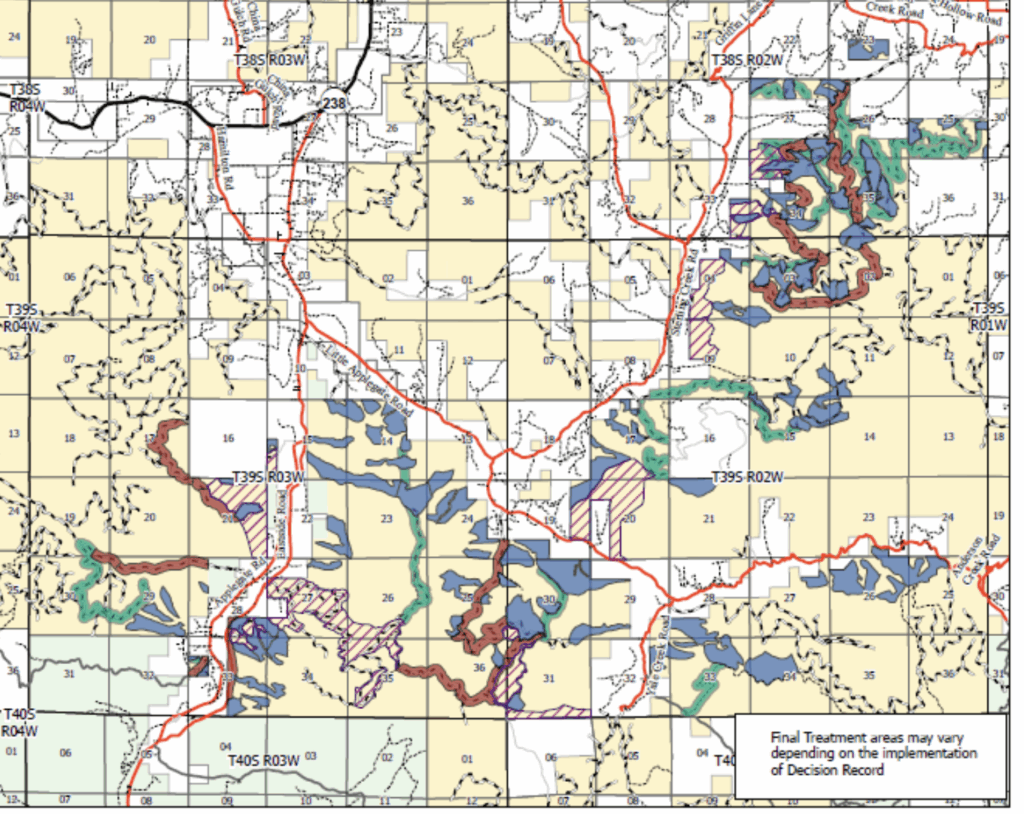
In total, 9,000 acres are proposed for logging in the Douglas Fir Mortality Complex Project with the vast majority proposed in the Applegate watershed. This is not only the largest individual timber sale in recent memory on BLM lands in the Applegate Valley, but it will also continue the implementation of the BLM’s so-called “salvage” logging operations, and the most damaging timber sale agenda since the heyday of old-growth logging in our region.
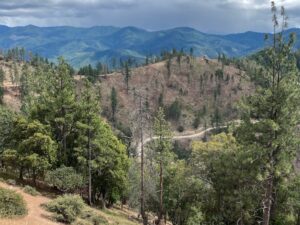
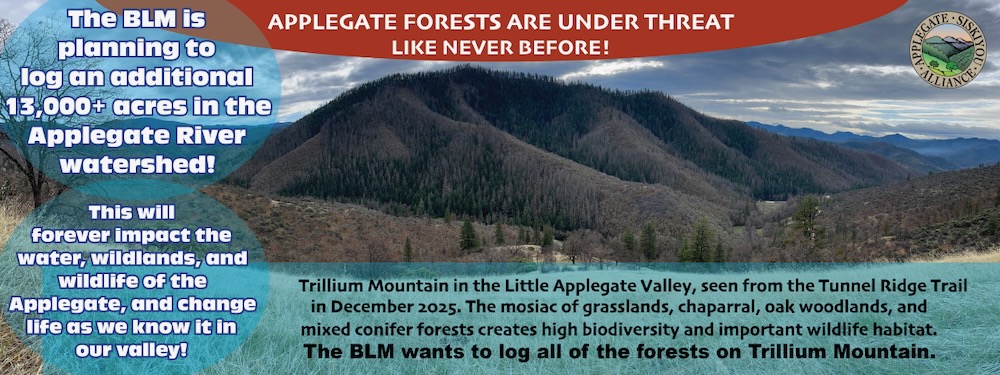
The impact of these logging projects would be unprecedented and would forever scar the mountains of the Applegate Valley with clearcuts and biologically sterile plantation stands, where mature, complex forests once stood. The result would be widespread deforestation across the Applegate Valley, logging off many large, fire resilient, relatively intact, mature, late successional, and even old-growth forests, as well as mature stands with recent beetle mortality. In total, the BLM is proposing approximately 13,000+ acres of “salvage” logging in the Applegate Valley, which will devastate forests and watersheds across our region.
The logging in “green” stands would permanently lock the door on northern spotted owl recovery across vast swaths of the Applegate River watershed, rendering currently suitable habitat useless to the owl by thoroughly degrading habitat conditions and leaving it unsuitable for many decades to come. The project proposes to create a long-term deficit in late successional stand characteristics by removing nearly all large diameter trees, standing snags, and large downed wood recruitment.
These same structurally simplified conditions would also impact species like the Pacific fisher, Siskiyou Mountains salamander, and great gray owls that nest, den, and/or rear young in the Applegate River watershed. The logging and yarding operations would also spread noxious weeds, damage soils, and degrade local streams and watersheds.
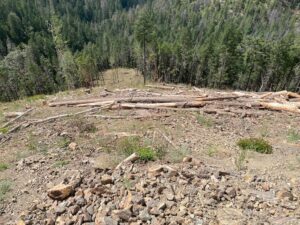
The net result of these logging activities would lead to increased fire risks across the eastern Applegate Valley, threatening communities, lives, and public safety. In stands with living overstory canopy, logging would remove large fire resistant trees and virtually eliminate the moderating effects of canopy. This in turn, would dramatically alter microclimate conditions by transitioning closed, relatively cool, moist habitat conditions with minimal understory growth into hotter, drier, more windy environments that are conducive to fast moving, high severity fires.
Additionally, within 1-5 years these stands would also include far more fine fuels on the forest floor where it is more accessible and volatile during fire events. This is because logging slash left behind during logging operations would mix with the dense, young, regenerating vegetation triggered by the large tree and canopy removal operations proposed throughout the Douglas Fir Mortality Complex Project. This will create an explosive fuel bed across thousands of acres.
According to BLM documentation, creating openings far smaller than the clearcuts proposed during BLM “salvage” operations would increase fire risks in both the short and long term.
“For the first 1 to 5 years after harvest, these stands would remain a slash fuel type until the shrubs, grasses, and planted trees become established. After the
establishment of regeneration, these stands would move into a brush fuel type.
Brush fuel types are more volatile and are susceptible to high rates of fire caused mortality. Stands could exhibit higher flame lengths, rates of spread, and fire intensity. Fires started within these stands could be difficult to initially attack and control. For 5 to 20 years following planting, the overall fire hazard would increase in these stands.” (BLM Clean Slate Timber Sale EA P. 192)
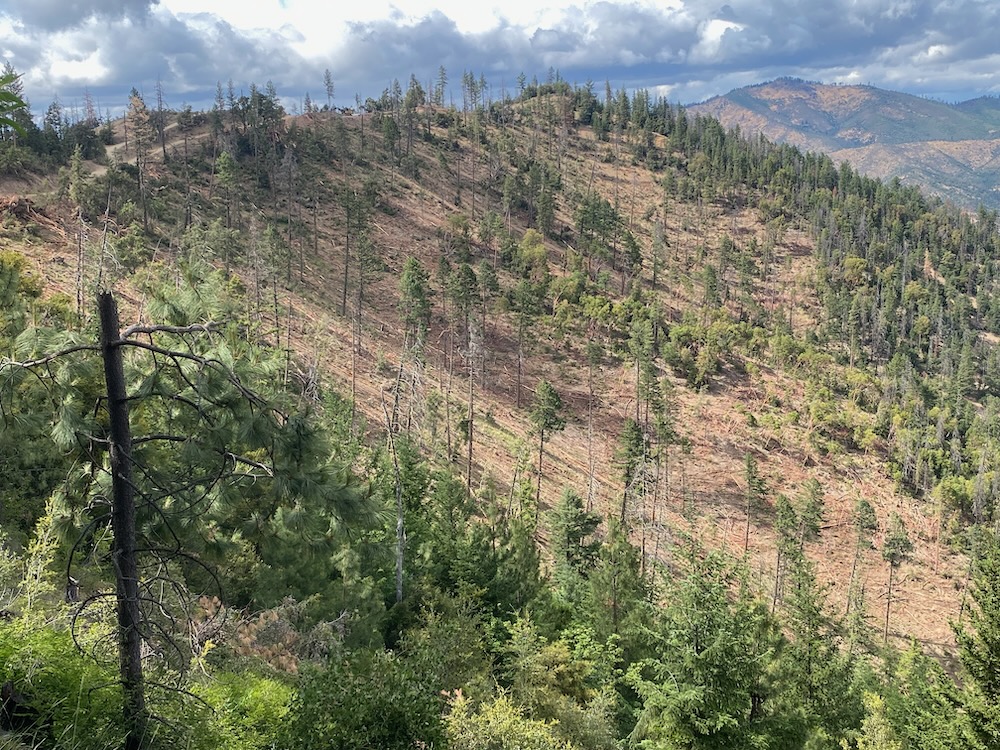
The impacts of the Douglas Fir Mortality Complex Project will only be more severe because the size of the openings would multiply wind speeds and the stand drying effects. The scale of the openings would also increase the scale at which young, even-aged vegetation occurs on the landscape, allowing for more intense fire behavior, faster rates of spread, and fires that are more difficult to contain or control.
Additionally, removing dead standing snags in salvage logging operations creates all the same impacts as green tree logging, if not more, due to the heavy handed logging operations and minimal tree retention in so-called “salvage” logging sales. The plantation-like stands created after “salvage” operations both resemble and operate like clearcuts, while the yarding, logging and hauling operations create significant downstream watershed effects. Snag forest logging releases vast quantities of carbon and degrades wildlife habitats filled with important biological legacies. Snag removal also impacts biological diversity, and simplifies the structural conditions found in regenerating stands.
Both the mainstem of the Applegate River and the Little Applegate River below the logging units contain important steelhead, chinook and coho salmon spawning habitats, and the logging proposed in the BLM’s Douglas Fir Mortality Complex Project, would lead to extensive watershed, fisheries and water quality impacts. In the recent Boaz Salvage Timber Sale seasonal streams were filled in to create skid trails for unauthorized ground-based yarding, Riparian Reserves were logged, and landslides were triggered by clearcut “salvage” logging in previously living, green stands. These landslides led to debris flows that filled streams with thick mud and logging slash, and continue to do so each time it rains.
Finally, if implemented, the logging proposed would further degrade the viewsheds of the Applegate Valley, turning one of Oregon’s most beautiful valleys and one of the region’s most unique habitats into a vast expanse of clearcuts. Recent BLM “salvage” sales have logged tens of thousands of large, mature, living trees while retaining as little as 0.9 trees per acre in some units, and as little as 4.6 trees per acre on average across entire timber sales.
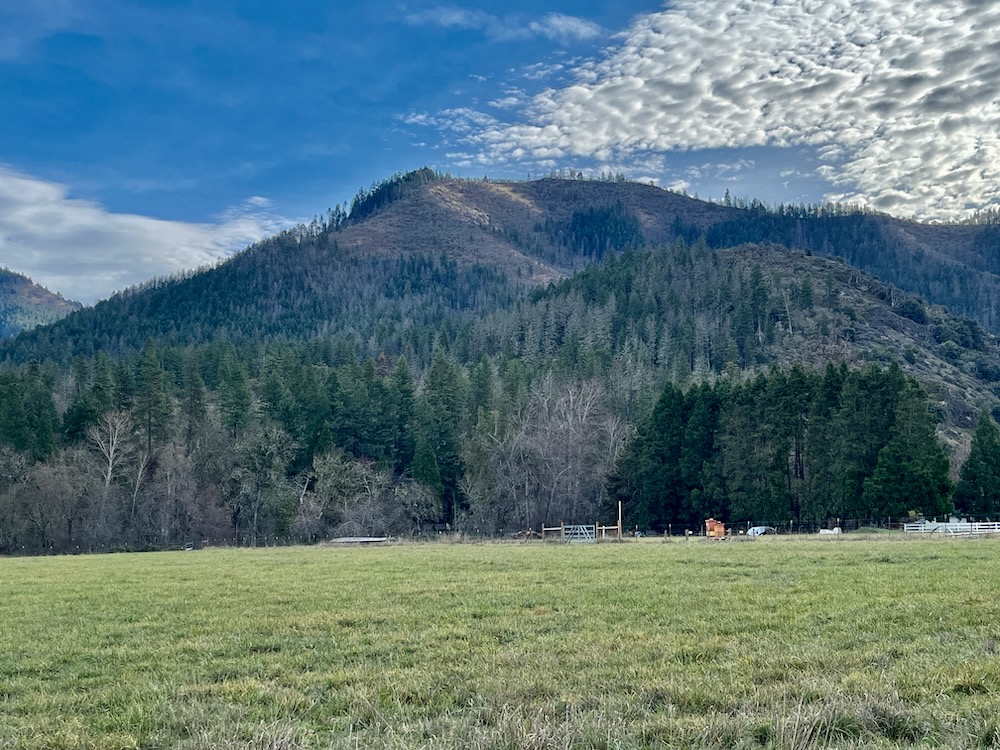
What does this mean for the Applegate Valley?
It means we get to live with the impacts of BLM logging everyday. It means incredible harm to the community and to our environment for generations to come. It means habitat destruction, stream sedimentation, impacts to fisheries, damage to scenic qualities, and irreplaceable harm to outdoor recreational opportunities.
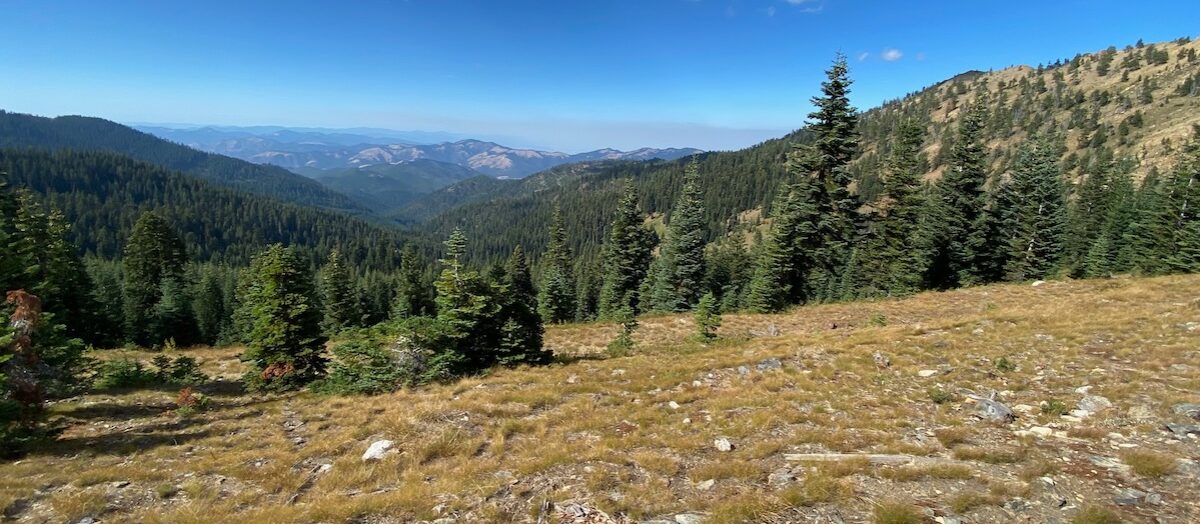
For residents of the Applegate, it means losing some of what we love, as we transition from living in a beautiful, relatively intact natural environment, to an industrialized, freshly damaged landscape filled with sunbaked slopes, noxious weeds, non-native grasses, dense young growth, denuded forests, extensive stump fields, new roadbeds, log landings, the deep vertical scars of skyline yarding systems on steep slopes, and dramatically increased fire risks.
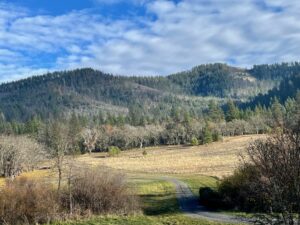
For businesses owners in the Applegate, it means damage to the viewshed surrounding your tasting rooms, vineyards, farms, bed and breakfast, vacation rentals, restaurants, farm stands, and cottage industries. It means damage to the scenic qualities for visitors and residents alike, as they drive through our region, hike or mountain bike our local trails, camp in local forests, and participate in our local economy. We all know it is the beauty of the Applegate Valley and the nearby public lands that bring residents and businesses to our region, and also keeps visitors coming back.
The BLM has proposed to wipe out the forests of the Applegate Valley as obedient servants of the Trump Administration. Claiming to be logging only “dead and dying” trees, the BLM has, in fact, been mowing down living, green forests in the Applegate River watershed for the past two years, logging off the very trees and stands of trees that survived the recent beetle mortality outbreaks.
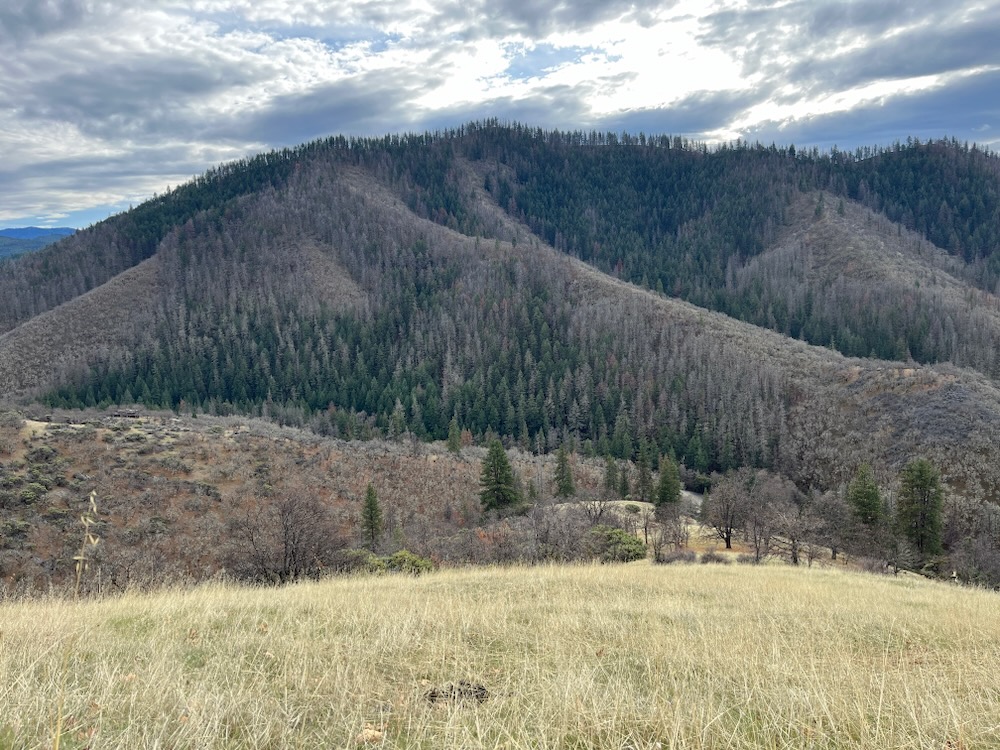
The future of the Applegate hangs in the balance and it will take significant community-based activism and advocacy to protect our backyards. Please comment on the Douglas Fir Mortality Complex and let the BLM know how you feel about turning the beautiful Applegate Valley into an ugly, biologically sterile stump field, with enormously elevated fire risks.
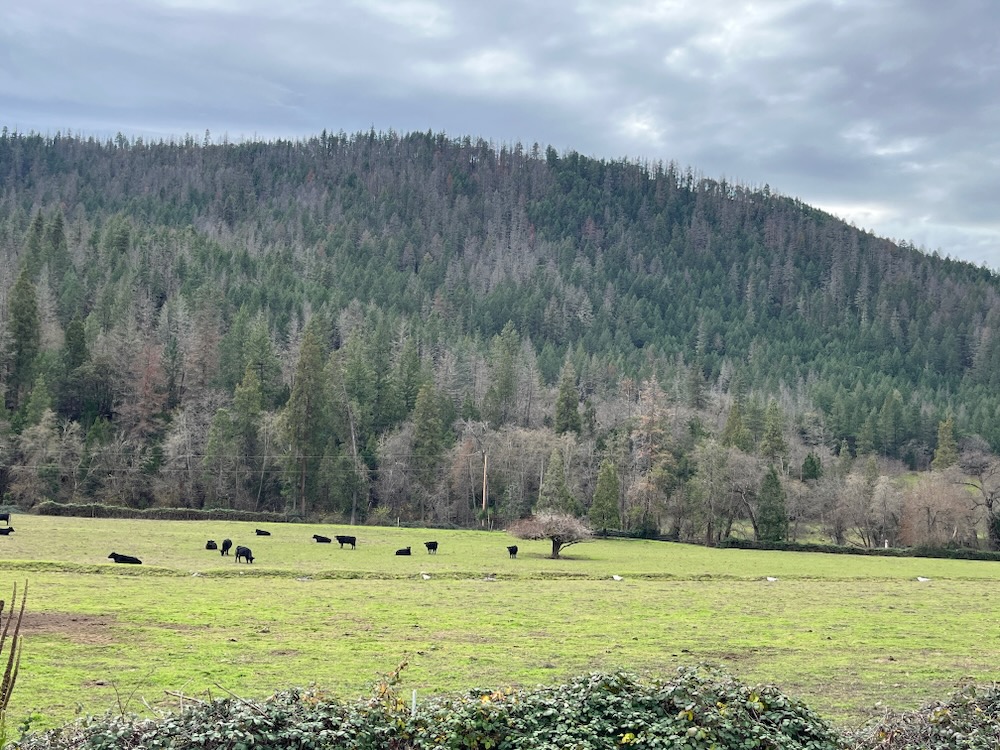
Talking Points For Your Public Comment
- The BLM is targeting extensive stands of living, viable, green forest with no sign of significant beetle mortality or infestation and is implementing clearcut salvage logging. Many of these forests are located in refugia habitats, including canyon bottoms, north-facing slopes, east-facing slopes, areas with deep soils, and in stand interiors where forest conditions moderate the impact of drought, heat, and beetle mortality events. These stands should be retained.
- Snags and downed wood are important habitat components necessary for forest development, vegetative regeneration, and resilience. They are also some of the most important wildlife habitats in our forested landscapes and should be retained to the largest extent possible on the landscape.
- No living trees should be removed, and only dead standing hazard trees within 100′ of regularly used BLM roads should be considered for removal. This action alone would meet public safety objectives, while maintaining more biological diversity, habitat resilience, and effective stand regeneration.
- The logging proposed in the Douglas Fir Mortality Complex Project would damage important habitat for the threatened northern spotted owl, the Siskiyou Mountains salamander, the Pacific fisher, great gray owls, and numerous native fisheries, including the threatened coho salmon in the planning area or areas downstream of the project area.
- The logging proposed in the Douglas Fir Mortality Complex would badly damage scenic qualities, local communities, viewsheds, and outdoor recreational activities, including Recreation Management Areas, forests along popular trails, in the viewshed of popular trails, in proposed trails systems associated with the Siskiyou Skyline Trail system, and within view of communities, residential properties, businesses, wineries, vineyards, tasting rooms, vacation rentals, event centers, etc., that thrive on the area’s scenic qualities and intact viewsheds. These would be profoundly negative impacts to this community and to recreational values in the area.
- The cumulative impacts associated with “salvage” logging in recent years have created enormous impacts not analyzed or authorized in the BLM’s 2016 Resource Management Plan. These impacts include dramatically increased fire risks, damage to important wildlife habitats, the degradation of water quality, stream habitats, water supplies, recreation opportunities and experiences, and scenic qualities. These cumulative impacts should also preclude the agency from further “salvage” activities due to already severe affects in the Applegate River basin.
- “Salvage” logging has no scientifically valid benefits and causes significant harm to the environment by removing biological legacies, starving future stands of snags, large living trees and large downed wood recruitment.
- Removing snags and living trees in areas affected by natural disturbances, like beetle outbreaks, is damaging to wildife, watersheds, outdoor recreation, local communities, natural environments, and increases fire risks by generating even-aged young, highly flammable vegetation and increased logging slash with little stand complexity, heterogeneity, or biological diversity.
- The results of “salvage” logging proposed in the Douglas Fir Mortality Complex Project will be the creation of widespread “regeneration” harvest, or clearcut logging units in dry forest habitats where these practices are not allowed in the BLM’s 2016 Resource Management Plan.
- Ask the BLM to cancel the Douglas Fir Mortality Complex Project and work with communities on real fire risk reduction adjacent to rural communities.
Submit comments at the BLM eplanning website by following this link and clicking on “participate now”