The Trump Administration’s Bureau of Land Management (BLM) has set their sights on Western Oregon forests and has started the process to revise the BLM’s 2016 Resource Management Plan (RMP). The goal is to dramatically increase timber production on 2.4 million acres of BLM lands, “to provide a sustained yield of timber production consistent with the maximum productive capacity of the lands.”
The BLM intends to quadruple timber production in Western Oregon from the already too high 250 million board feet per year, to approximately 1 billion board feet annually.

Like so many of the administration’s regressive policies, these RMP Revisions propose to take us back to the wildly unsustainable timber harvest levels of 1960-1990 when whole watersheds of old-growth forest were being liquidated in vast clearcuts, roads were being punched into remote habitats, wildlife populations were plummeting, watersheds across the state were failing and fisheries were collapsing in unison across the Pacific Northwest.
According to a recent blog by long-time environmental advocate, Andy Kerr, at the peak of cutting in 1988 the BLM was logging 3.6 square miles of old-growth forest per month in its Western Oregon holdings, and 3 square miles per week on both Forest Service and BLM lands. The BLM also acknowledged implementing 22,414 acres of clearcut logging and 6,212 acres of “partial cut” logging in western Oregon in 1988 alone, with the highest number of acres occurring on the Medford District BLM.
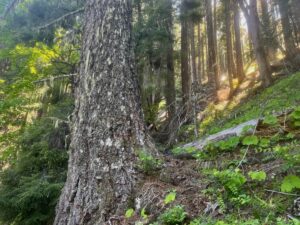
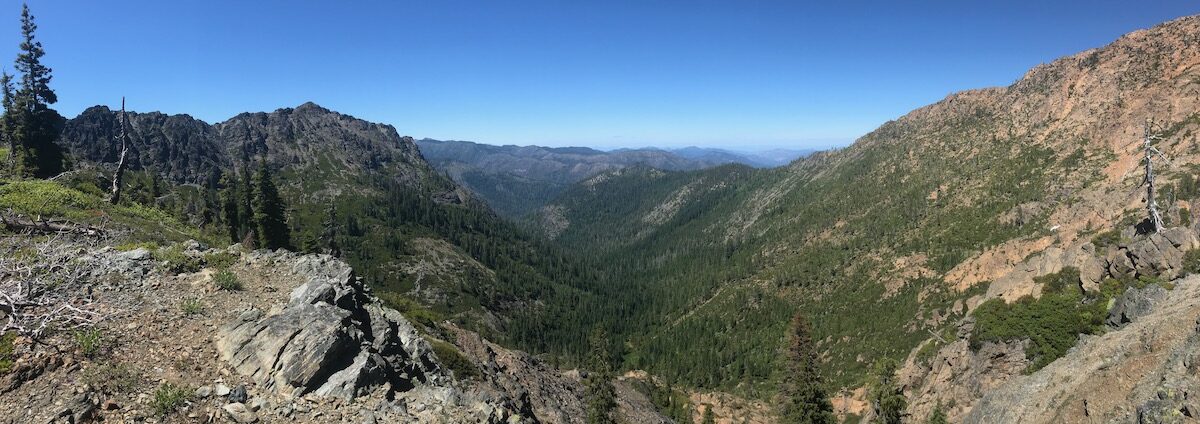
In practice, what the current RMP Revision will do is strip the region of environmental, watershed, and habitat protections and facilitate widespread clearcut logging and new road construction on the vast majority of the agency’s land in Western Oregon. This would impact beautiful BLM lands and important habitats between the Columbia River and the California border in the Coast Ranges, on the western slope of the Cascade Mountains, and in the Siskiyou Mountain of southwest Oregon, including the Applegate River watershed and broader Siskiyou Crest region.

This level of harvest can only be described as deforestation and wholesale environmental destruction. A return to this level of industrial timber harvest will lead to a dramatic expansion in clearcut logging, the development of highly flammable plantation stands across broad landscapes, high-graded and heavily logged stands with virtually no biological integrity, enormously detrimental watershed effects, and scenic Oregon viewsheds riddled in unsightly logging scars and new road cuts.
Ironically, these issues have been resolved in the courts and both BLM and big timber’s interpretation of the 1937 O&C Act, as a timber-only mandate has been thoroughly rebuked. Unable to accept these limitations on their plunder of public lands the BLM, the timber industry, the O&C Counties (such as Jackson, Josephine, and Curry County is southwestern Oregon), and the Trump Administration are intent on increasing timber production, regardless of the enormous impacts.
Representing the politics of corruption, greed, and unsustainable excess, the BLM has been fully captured by the timber industry and is prioritizing short-term profits for wealthy shareholders, over the health of our forests, watersheds, and communities in Western Oregon.

Many of the rural communities in the region have transitioned from unsustainable timber-dependent economies to more balanced economies centered around tourism, outdoor recreation, fisheries, agricultural enterprises and amenities. In this way, the beauty of the region is central to its economic vitality, and the shift away from heavy, industrial scale resource extraction also supports a higher quality of life for local residents, maintains a beautiful, healthy environment for the benefit of surrounding communities, and provides cold, clean water to regional farms, ranches, vineyards, and river ecosystems.
Western Oregon is known for its beautiful coastlines, towering forests, verdant streams, wild rivers, world-renowned fisheries, intact mountain vistas, and abundant wildlife. Many in the region take pride in where they live, the natural beauty it offers, and its incredible biodiversity. We feel blessed to live in such spectacularly scenic landscapes and value them immensely.

The BLM’s RMP Revision is a threat to what we love in Oregon and must be stopped. We implore our neighbors, residents throughout the state, visitors who love the region, conservationists, hikers, hunters, fishers, whitewater rafters, botanists, birders, elected officials, and all who love Oregon’s public lands to speak out for its defense.
Please comment on the Scoping Notice for the RMP Revision and tell BLM:
- The proposed increase in logging is unsustainable, irresponsible, and will degrade public resources like clean water, fisheries, intact forests, wildlife habitats, and public wildlands.
- Timber production in the Annual Sale Quantity (ASQ) should be adjusted downward to compensate for the 2021 Labor Day Fires, recent beetle outbreaks in southwest Oregon, and mortality related to climate and drought effects.
- Oregon’s public lands should be managed for public values, not private timber industry interests.
- The courts have confirmed that O&C Lands should be managed for multiple uses, including conservation, wildlife, watersheds, recreation, and others. These lands do not have a timber-only mandate.
- Maintain and expand all current conservation-based Land Use Allocations, including Areas of Critical Environmental Concern, Lands with Wilderness Characteristics, Wild and Scenic Rivers, Wilderness Areas, Late Successional Reserves, Research Natural Areas, and Riparian Reserves.
- Heavy commercial logging, as proposed by the BLM in the RMP Revision, will dramatically increase fire risks by removing large fire resistant trees, altering microclimate conditions, and regenerating dense, highly flammable young growth. This creates conditions that are conducive to hotter, more fast-moving fires.
- Many rural communities have transitioned away from public land timber production and into more sustainable, balanced economies. These economic activities will be significantly harmed by increased timber production.
- The BLM has proven themselves so irresponsible in their management of public lands and has so thoroughly violated the public’s trust, that I support the transfer of all BLM lands in western Oregon to the adjacent National Forests.
Note: Our own Medford District BLM Manager Elizabeth Burghard, is the official Oregon/Washington BLM contact for this RMP Revision and Western Oregon clearcut logging plan. After increasing timber production here on the Medford District in the past two years, apparently the Oregon/Washington Office and the Trump Administration took note, putting her in charge of the largest BLM Timber Grab in recent history! She is the official contact for this project and all communications should be addressed to Elizabeth Burghard, the individual most responsible for the current logging impacts in the Applegate, and the point person for the destruction of forests across the state!
Take Action!
Provide comments to the BLM through the following methods:
- Website: https://eplanning.blm.gov/Project-Home/?id=a591dee8-500c-f111-8406-001dd8029ed0 click on the participate now tab on near the top of the page to comment.
- Email: BLM_OR_Revision_Scoping@blm.gov.
- Mail: Attention BLM OR930: 1220 SW 3rd Ave, Portland OR 97204.
- Sending in your own letter is the most powerful way to have your voice heard, but you can also send a quick letter through the Center for Biological Diversity‘s letter campaign here:
Documents pertinent to this proposal may be examined online at Northwestern and Coastal Oregon and Southwestern Oregon Resource Management Plan Revision