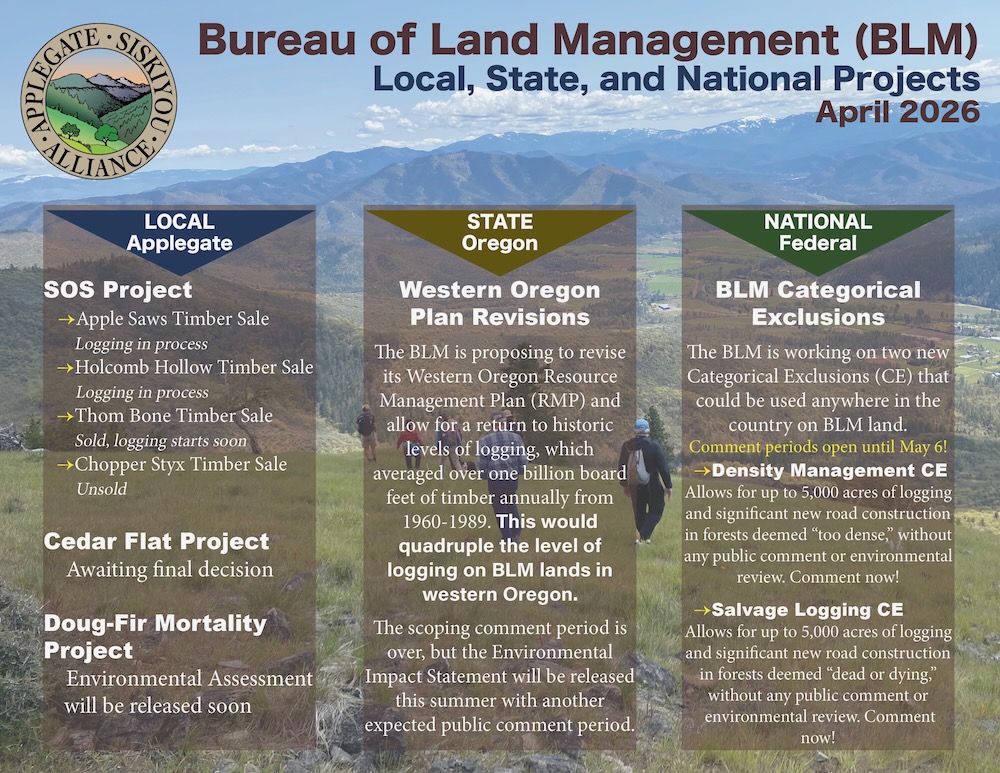
On a national level the BLM has proposed two new Categorical Exclusions (CEs) that collectively, would rubber-stamp commercial logging in forests and woodlands across the country.
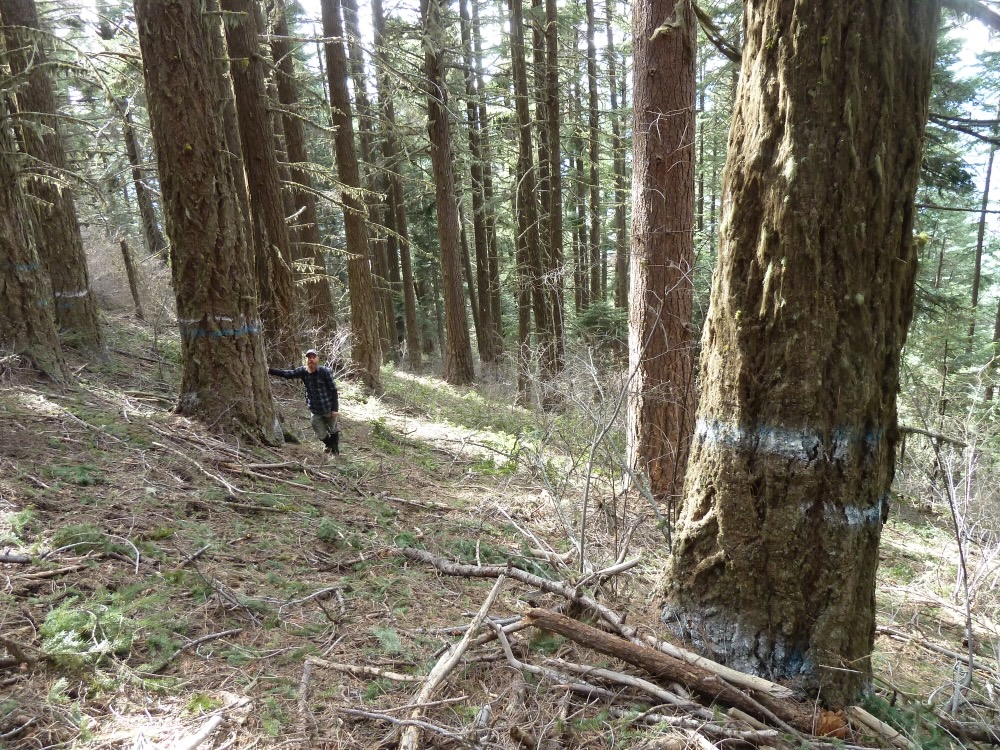
Utilizing a CE for project approval triggers a process that categorically excludes the public from the public land management planning process and takes away existing opportunities for public comment. The process also eliminates requirements for a substantive environmental analysis, and the disclosure of environmental effects.
COMMENT NOW! Links to comment on these projects are at the bottom of this blog post. Comments are due May 6th, 2026.
Simply put, a CE allows the BLM to approve land management projects that the agency claims will have minimal environmental effects, but it is not required to back up those claims with analysis. It also allows the agency to do so while excluding you, community groups, environmental advocates, and virtually everyone but the timber industry from the process. On a practical level, what these two CEs would do is allow the BLM to authorize virtually any large-scale logging project it can design, logging its way across the landscape 5,000 acres, or 7.8 square miles at a time.
Historically, public involvement included the release of a scoping notice during the early stages of project planning, and a scoping comment period. In theory, this allows the public some ability to influence projects as they are designed, developed, and analyzed. This process is then followed by the release of an Environmental Assessment (EA) or Environmental Impact Statement (EIS), and another public comment period. This is intended to allow the agency to to gauge public opinion, consider public input, and both design and approve projects that were influenced by the public involvement process. Historically, this also included public meetings, or field trips to discuss the proposed project during these official comment periods.
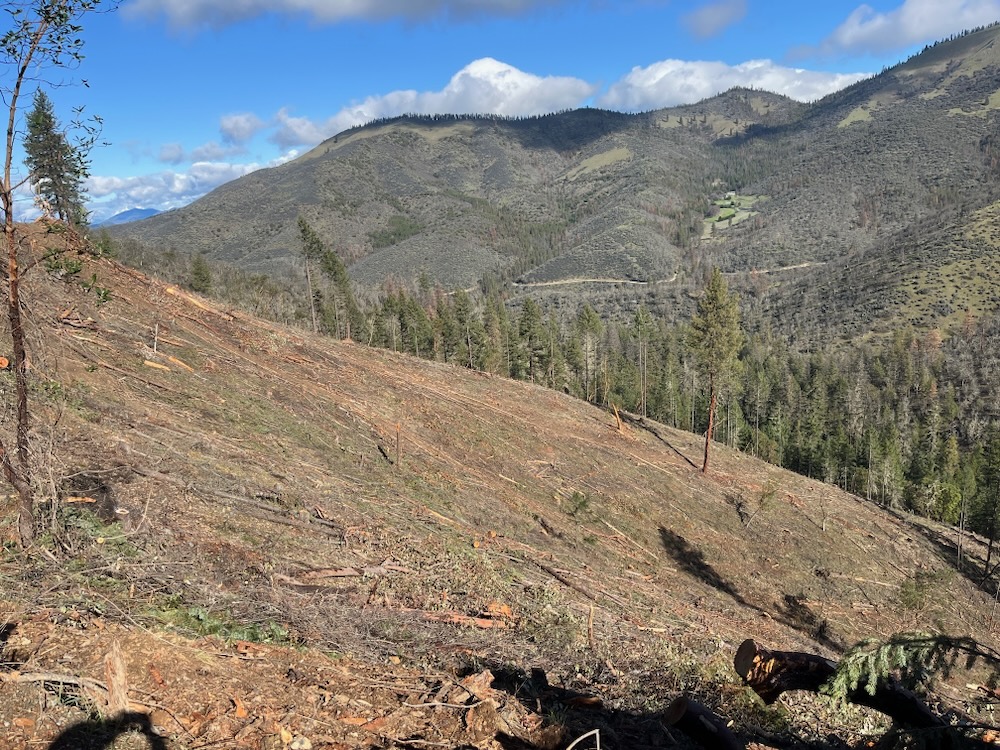
Under a CE, this public involvement and environmental analysis process would be abandoned, and the BLM would simply design, develop and authorize a logging project internally, without any public involvement or notification. The first notification to the public would be the announcement of a Decision Record and timber sale auction, which are now also closed to the public.
In this process, the BLM would no longer conduct or allow for public comment; they would no longer analyze the potential impact of project activities, and they would no longer disclose to the public what the impact of these management activities might be. Instead, the process is designed specifically by the BLM to rubber-stamp damaging BLM timber sale activities and fast-track large-scale logging projects on forested BLM lands throughout the country, including western Oregon and the Applegate River watershed.
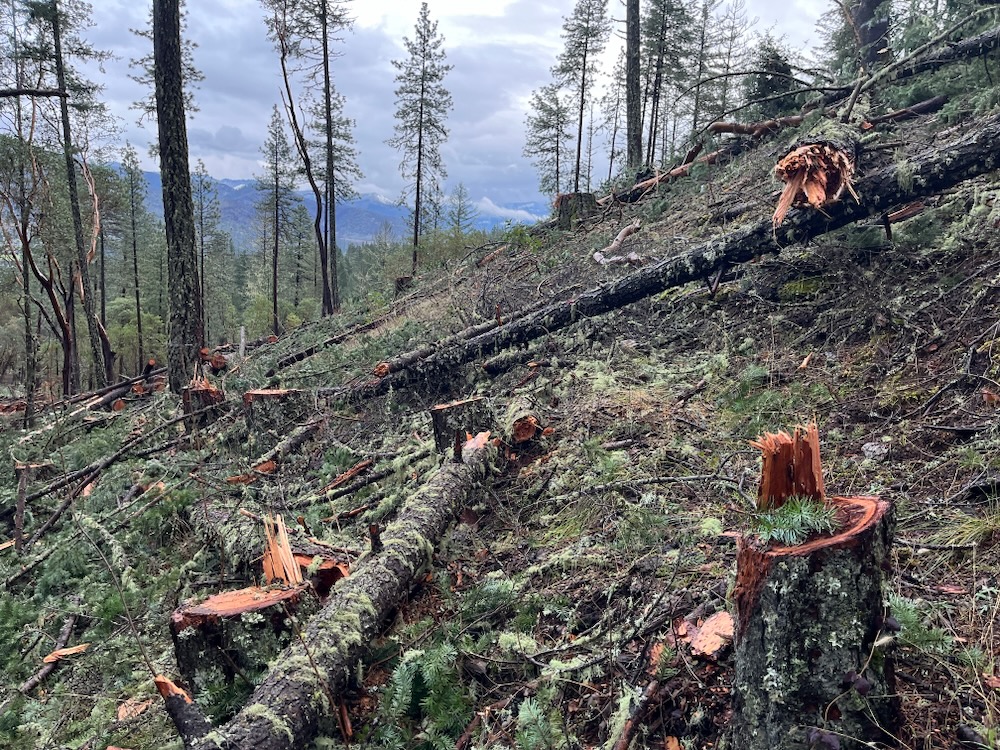
Although proposed separately, in practice these CEs would allow BLM to authorize the type of lawless, widespread, industrial-scale logging the Trump Administration envisions on our public lands with virtually no public accountability. It would allow for heavy logging, at a landscape scale in both living green forests and in forests subjected to natural disturbance processes like wildfire, beetle outbreaks and other forms of tree mortality.
Make no mistake, this is a blank check to log virtually any forest the BLM chooses, while excluding credible science, substantive environmental review and public involvement.
If authorized, these CEs would allow BLM to log virtually every public forest in its ownership by approving unlimited numbers of 5,000-acre timber sales, and if previous attitudes at BLM are any indication of the future, the agency will immediately unleash a flurry of CEs and timber sales once this is approved. The agency will most certainly log off the forests you love, and the forests that are so important in maintaining habitat both throughout the region, and across this beautiful country.
The new Categorical Exclusion for density management and green tree logging projects on BLM lands
Historically, the agency has allowed for the Categorical Exclusion of commercial logging to address “forest health” concerns in living, green stands; however, it has been limited in each individual CE to 70 acres and 0.5 miles of new road construction. We have seen this Categorical Exclusion misused to authorize damaging logging and road construction projects with significant environmental effects, however, we have thankfully also seen most green, or living tree timber sales implemented using full public comment periods and environmental review to analyze and disclose the impact of the logging proposed in an Environmental Assessment (EA) or Environmental Impact Statement (EIS).
This new CE proposes “commercial thinning,” but provides virtually no limitations on where these treatments would take place, no diameter limit on tree removal, no canopy cover retention targets, and although it specifically excludes clearcut or regeneration harvest, it would allow group selection logging clearcuts up to 2 acres in size, and heavy industrial-scale logging that retains minimal canopy cover and a few scattered trees per acre.
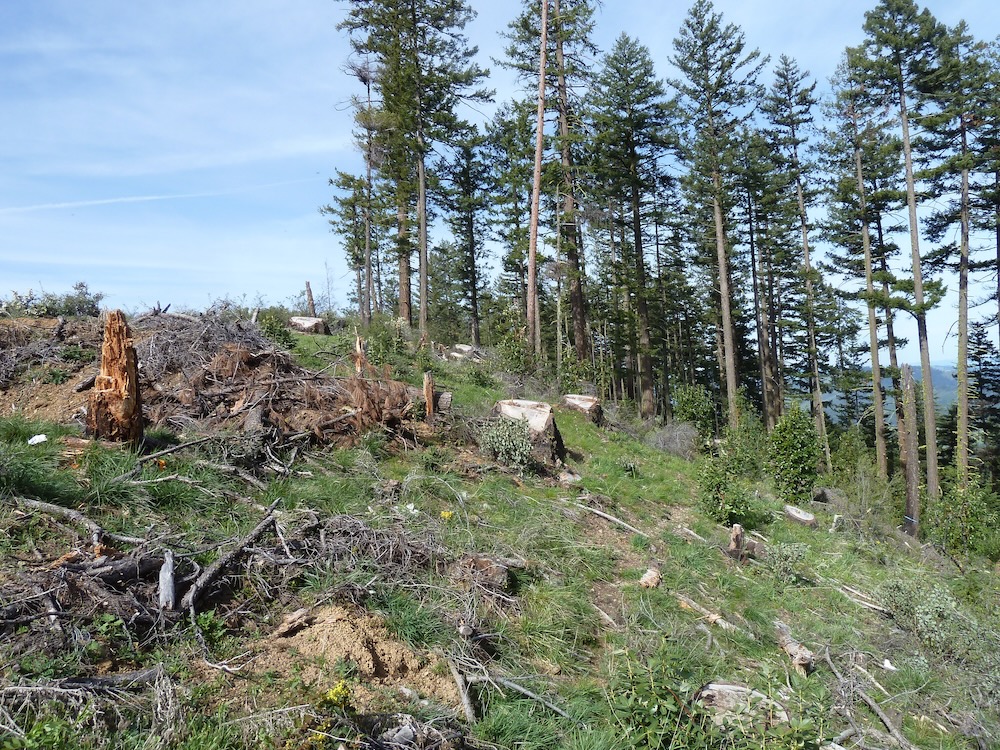
It would also authorize projects with as much as 5 miles of new permanent road construction and up to 2.5 miles of new “temporary” road per 1,ooo acres of treatment area. This means as much as 12.5 miles of “temporary” road per 5,000-acre project area.
What the BLM has proposed in this new Categorical Exclusion is the implementation of “density management” logging at a much larger scale and with very few guardrails, authorizing Categorical Exclusion for projects up to 5,000 acres, or approximately 7.8 square miles in size. This is more than 70 times the size of the current Categorical Exclusion authorizations for “forest health” or “density management” type logging operations, and would have significant impacts on public resources, biological values, recreational settings, and scenic values for communities and watersheds across the region.
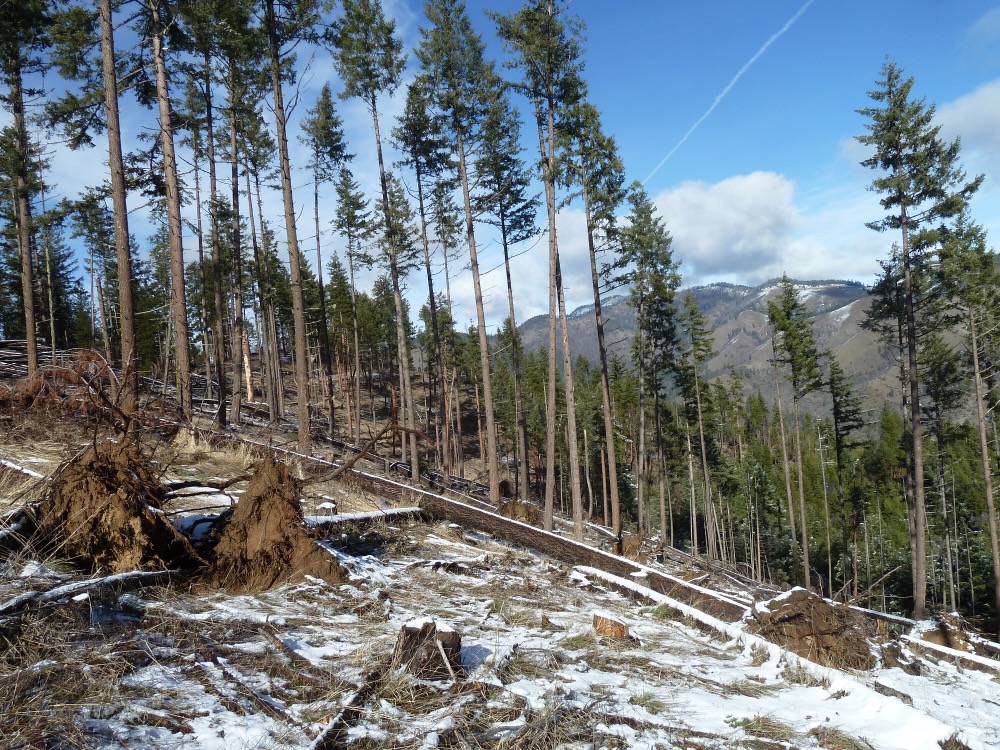
The impact of a single CE would be devastating on a local scale, and the implementation of unlimited numbers of CEs across virtually all BLM forest or woodland nationwide is simply enormous. The CE is essentially a public forest give-away to private industry and must be vigorously opposed.
The new Categorical Exclusion for “salvage” logging on BLM lands
Current Categorical Exclusion authorizations for salvage logging are limited to 250 acres and up to 0.5 miles of new temporary road construction. Again, we have seen this Categorical Exclusion for salvage logging repeatedly misused to target living, green trees, and to implement projects with very significant environmental effects. Large-scale salvage logging, over 25 acres, as proposed by the BLM in this new CE, has historically been implemented using full public comment and environmental review with and Environmental Assessment (EA) or Environmental Impacts Statement (EIS).
ASA has monitored numerous recent projects authorized under the current 250-acre “salvage” logging CE, and these projects have targeted predominantly living trees, and created immense amounts of damage to local habitats, watersheds, wildlife, wildfire resilience, and scenic values in the Applegate Valley. This includes the devastating examples of the Boaz Salvage Timber Sale, the Forest Creek Salvage Timber Sale and the Lickety Split Timber Sale, where industrial logging in living green forests, illegal road construction, unauthorized yarding activities, unenforced Project Design Features, wet weather logging, and poor or non-existent project administration led to landslides, debris flows, permanent damage to streams, the bulldozing and clearcutting of Riparian Reserves, and unanalyzed levels of damage to living forests, native vegetation and habitat values.
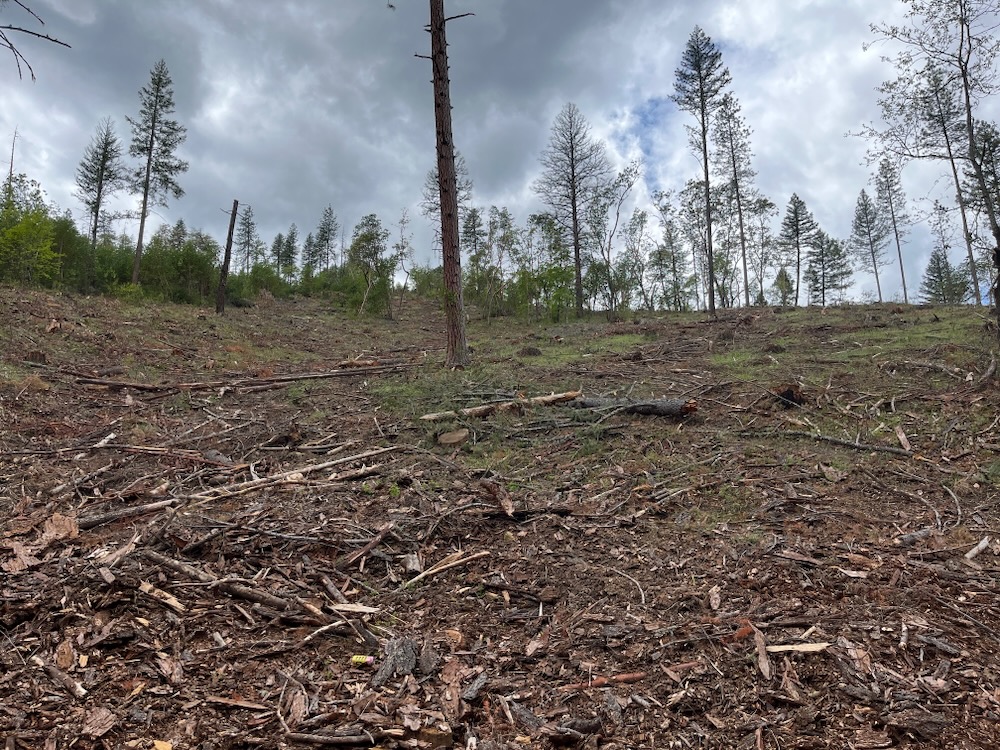
The newly proposed CE is intended to scale up these impacts by allowing large-scale salvage logging in areas up to 5,000 acres, or across 7.8 square miles in size. It would also allow the construction of up to 1 mile of new permanent road construction and up to 2.5 miles of so-called “temporary” road per 1,000 acres of treatment area. This would authorize up to 20 times the acreage in the current CE and would dramatically increase impacts associated with widespread road construction.
Like the new density management CE, this new “salvage” logging CE provides virtually no limitation on where these treatments might take place, meaning they will be used across the entire BLM landscape.
We know firsthand in the Applegate how this narrative of “dead and dying” trees, and “salvage” logging can be used by the BLM to target living, viable stands of mature forest, devastating local watersheds, wildlife habitat, and scenic values. We also know the damage associated with salvage logging in stands with significant mortality and the lasting impact this logging has on habitat values, forest regeneration and future fire risks.
Now imagine, the landslides, clearcuts, the widespread green tree logging, and environmental damage of last winter’s Boaz Salvage Timber Sale implemented across 20 times more land. Imagine projects like the current SOS logging project, which is decimating the habitats around Ruch being approved one after another, with no opportunities for our communities to have a voice in the process. This is the vision of the Trump Administration and their willing partners at BLM, who are eager to cut the public out of the process, while they cut down our public forests.
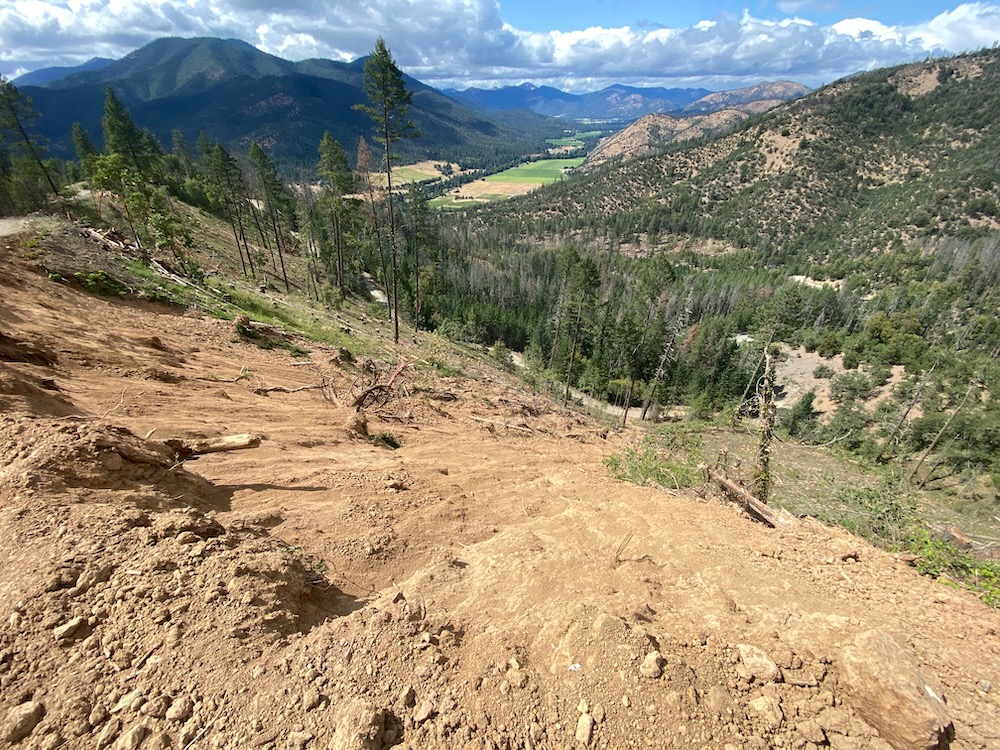
Combined these two Categorical Exclusions, along with the proposed RMP Revisions would irreparably damage our public lands, degrade wildlife habitats, impact fisheries and degrade the beautiful public lands we enjoy today. It would also degrade trust in the BLM, and leads to a very valid questioning of the agency’s commitment to public values, public involvement, and a livable planet for future generations.
Please comment now on these irresponsible Categorical Exclusion proposals—if implemented they will change BLM forests and woodlands forever.
COMMENT NOW! Talking Points for the Density Management CE
- Commercial logging projects proposed at the scale envisioned under this new CE would create significant environmental impacts on local watersheds, wildlife, fire resilience, habitat connectivity, biodiversity, and on local human communities.
- Current BLM logging practices are creating significant environmental effects and demonstrate a need to implement full comment periods and environmental analysis/review for all projects of the scope, scale and intensity proposed. This requires the release of an Environmental Analysis or Environmental Impact Statement with site specific, project level analysis for each individual logging project.
- Commercial logging can increase fire risks by logging large fire resistant trees, reducing canopy cover, increasing understory fuel development and creating hotter, drier, more fire prone environments.
- Commercial logging and road construction at the scale and intensity proposed will damage watersheds and fisheries by increasing sedimentation and reducing water quality.
- Commercial logging, density management, and road construction at the scale proposed will have negative impacts on endangered species, wildlife habitat, mature, late successional, and old growth forests, scenic values, recreational values and local economies.
- Proposals to increase the scope, scale and use of Categorical Exclusions are undemocratic, unlawful, inappropriate, and fail to maintain the public interest in public land management planning.
For more information on this new Density Management CE proposal and to provide public comment, click on the buttons below.
COMMENT NOW! Talking Points for the Salvage Logging CE
- Salvage logging has significant biological impacts and no credible biological benefit to forest or woodland ecosystems.
- BLM salvage logging often includes significant green, or living tree removal and is typically implemented as clearcut logging which increases fire risks, degrades habitat values, damages watersheds, and impact the areas scenic qualities.
- Salvage logging projects proposed at the scale envisioned under this new CE would create significant environmental impacts to local watersheds, wildlife, fire resilience, habitat connectivity, biodiversity, and on local human communities.
- Current BLM salvage logging practices are creating significant environmental effects and demonstrate a need to implement full comment periods and environmental analysis/review for all projects of the scope, scale and intensity proposed. This includes at least an Environmental Assessment or Environmental Impact Statement for each individual timber sale project.
- Salvage logging can increase fire risks by logging large fire resistant trees, reducing canopy cover, increasing understory fuel development and creating hotter, drier, more fire prone environments.
- Salvage logging and road construction at the scale and intensity proposed will damage watersheds and fisheries by increasing sedimentation and reducing water quality.
- Salvage logging and road construction at the scale proposed will have negative impacts on endangered species, wildlife habitat, mature, late successional, and old growth forests, scenic values, recreational values and local economies.
- Proposals to increase the scope, scale and use of Categorical Exclusions are undemocratic, unlawful, inappropriate, and fail to maintain the public interest in public land management planning.
For more information on this new Salvage Logging CE proposal and to provide public comment: