
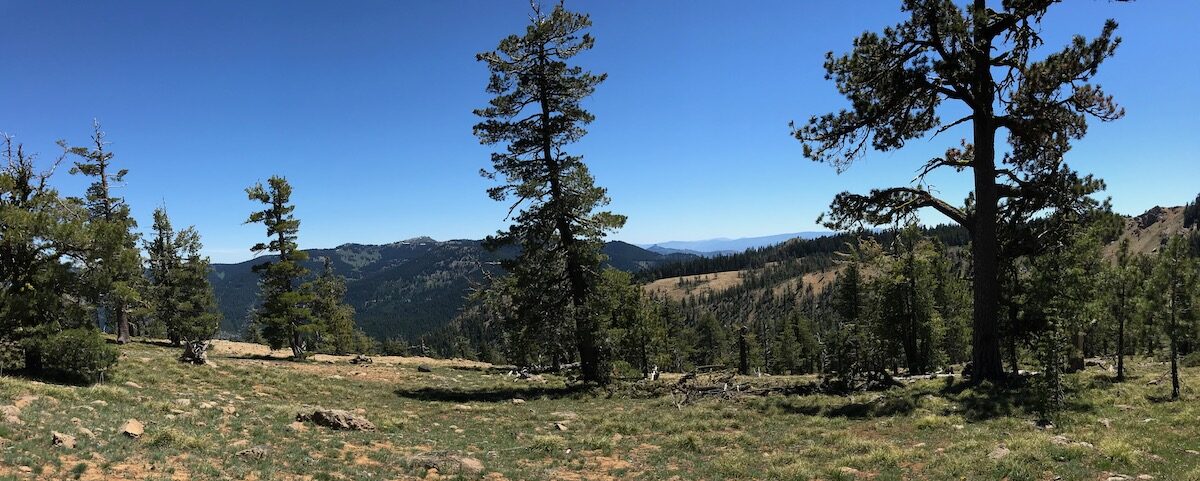
Click play to watch a short video from on-the-ground monitoring of the Apple Saws Timber Sale on Ben Johnson Mountain above Ruch.
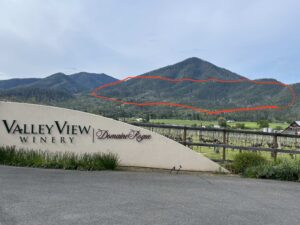
Ben Johnson Mountain rises like a broad, forested dome directly above the popular Cantrall-Buckley County Park and its swimming holes along the Applegate River. The mountain is visible from residences, vineyards and farms across the Ruch area, and from nearby hiking trails like the East Applegate Ridge Trail.
On New Year’s day, the Medford District BLM and Estremado Logging began logging off the mountain’s eastern face, desecrating our beloved mountain with logging scars. Although the BLM claims to be logging only dead and dying trees in this timber sale, the forests on these slopes contain very little recent tree mortality. In fact, these forests survived the 2022-2023 flat headed fir borer outbreak as refugia habitats, and relatively little tree mortality has occurred.
Ironically, the BLM admits that some stands in the Apple Saws Timber Sale may contain as little as 10% mortality, and some appear to have far less when surveyed on the ground, and yet, astoundingly the BLM proposes to log 82% of the trees in these forests, leaving little but scattered trees, vertical skyline yarding scars, and soils churned, compacted, and displaced by heavy equipment use.
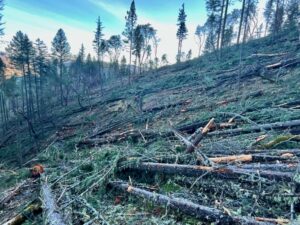
Additionally, the BLM is allowing the logging contractors to exceed authorizations in the applicable BLM documents. What we have found in the Apple Saws Timber Sale is the myth presented by the BLM in their timber sale approval documents, and the realities, which are demonstrated clearly on the ground.
Much like the recently implemented Boaz Salvage Timber Sale, which ended in landslides, debris flows and permanent damage to forests, riparian areas and streams, the Apple Saws Timber Sale is being implemented with disregard for public resources and the agency’s own regulations, and it is having tragic consequences.
The BLM has woven a narrative about reducing fire risks, mitigating environmental effects, and implementing Project Design Features (PDFs) to protect public resources, but these are myths, not supported by the evidence on the ground. The Apple Saws Timber Sale is a disaster in the making, and like the Boaz Salvage Timber Sale implemented last winter, it is being implemented in a manner that dramatically exceeds the environmental impacts analyzed or authorized in the Ashland 2025 SOS Environmental Analysis (EA), the Ashland 2025 SOS Decision Record #3 for the Apple Saws Timber Sale, or Apple Saws Full Timber Sale Prospectus.
Apple Saws Timber Sale: The Myth and the Reality
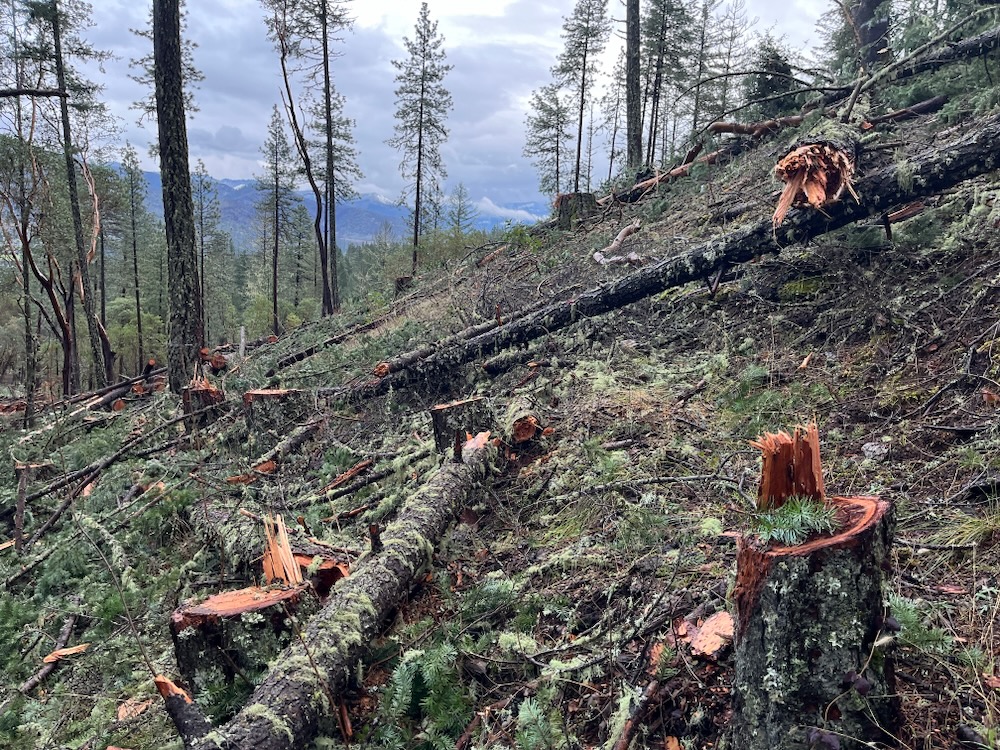
Only the first few units have been implemented in the Apple Saws Timber Sale, but already both the myths of the BLM’s analysis and impacts of the project are becoming crystal clear. Currently, the agency is not just looking the other way while authorizations are violated, they are knowingly allowing, and excusing the lack of compliance on the ground, leading to impacts that exceed those authorized by the BLM.
Myth #1 – Only dead and dying trees are being cut and removed
“Retain all healthy trees which show no signs of insect infestation or decline unless removal is required for safety or operational purposes.” (Ashland SOS EA P. 11)
“Within stands experiencing mortality, healthy living trees are not the target of salvage harvest.” (Ashland SOS Decision Record #3 P.8)
“Area units are RETENTION MARKED in WHITE for salvage harvest. All unmarked Douglas-fir trees meeting minimum merchantability specifications have been deemed dead or dying.” (Apple Saws Full Timber Sale Prospectus P. 2)
“Reserve all healthy, green trees in all DXP-LF units” (Timber Sale Prospectus P. 5)
Reality #1 – Significant living, green trees are being felled and removed across the Apple Saws Timber Sale
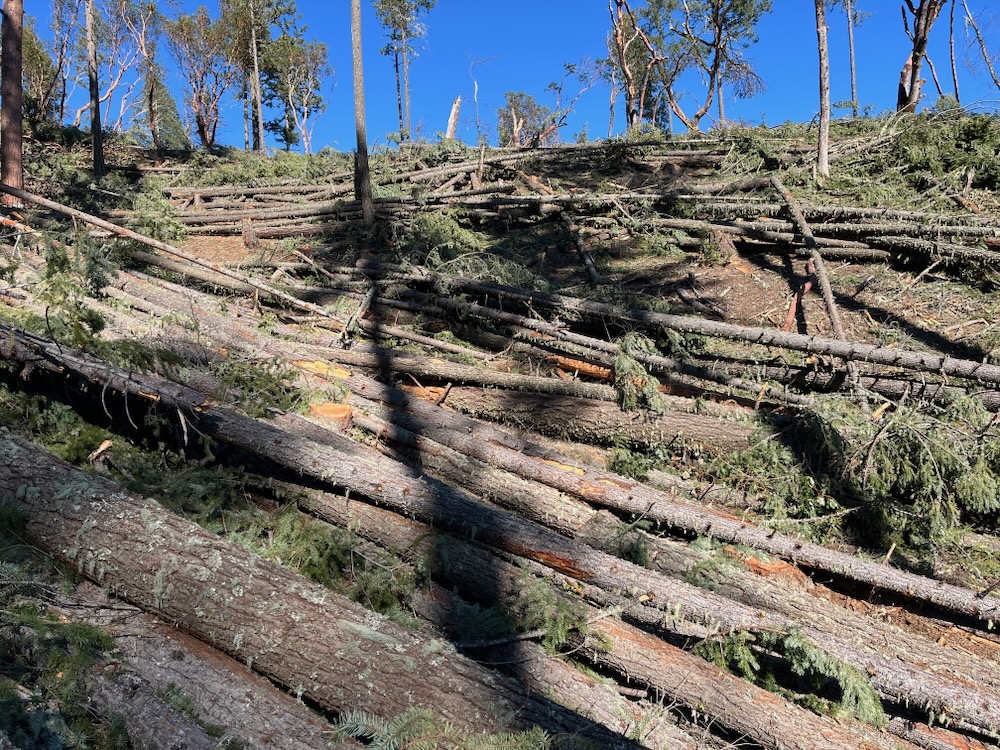
Whole stands of living, green, non-beetle infested trees are being logged all across the Apple Saws Timber Sale. In fact, the Ashland 2025 SOS EA allows for logging in stands with as little as 10% mortality, and the timber sale prospectus reveals that 82% of the trees in these stands will be logged, in the timber sale if fully implemented.
Currently, the first few units have been logged and have included predominantly the removal of living, green trees, as well as extensive trees marked white for “retention,” but logged by Estremado Logging throughout the timber sale.
In response to our complaints that many living, green trees and retention trees are being removed, BLM has responded by stating, “The Apple Saws Timber Sale is removing dead and dying Douglas-fir trees as analyzed in the Ashland 2025 SOS Environmental Assessment and authorized in Decision Record 3.” They also claim, “Conifer trees that were reserved marked and cut for operational purposes (yarding corridors) have been swapped with conifer trees that were not reserve marked to maintain adequate post-harvest residual densities.”
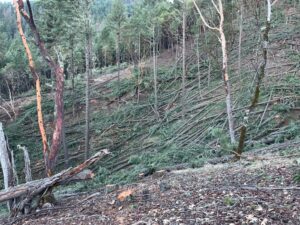
What we can see on-the-ground in the Apple Saws Timber Sale is the widespread removal of living, green, non-beetle infested trees. In fact, almost none of the trees we have seen felled throughout this timber sale were dead standing snags. Additionally, large Douglas fir trees clearly marked for “retention” have been cut at scale across unit 32-7, and it does not appear they were replaced with comparable trees or “swapped” out as the BLM suggests.
We are also concerned that canopy cover and density targets are not being met and northern spotted owl habitat development is being “precluded and delayed” for more than 20 years in violation of the BLM’s 2016 Resource Management Pland and its management direction for Late Successional Reserve (LSR) forests. The flanks of Ben Johnson Mountain and the surrounding areas are LSR forest and should be managed for the maintenance, enhancement, and recruitment of late successional forests. This timber sale is having the opposite affect and will set back LSR habitat values for many decades to come.
Myth #2 – Hardwoods are not being cut and removed across the Apple Saws Timber Sale
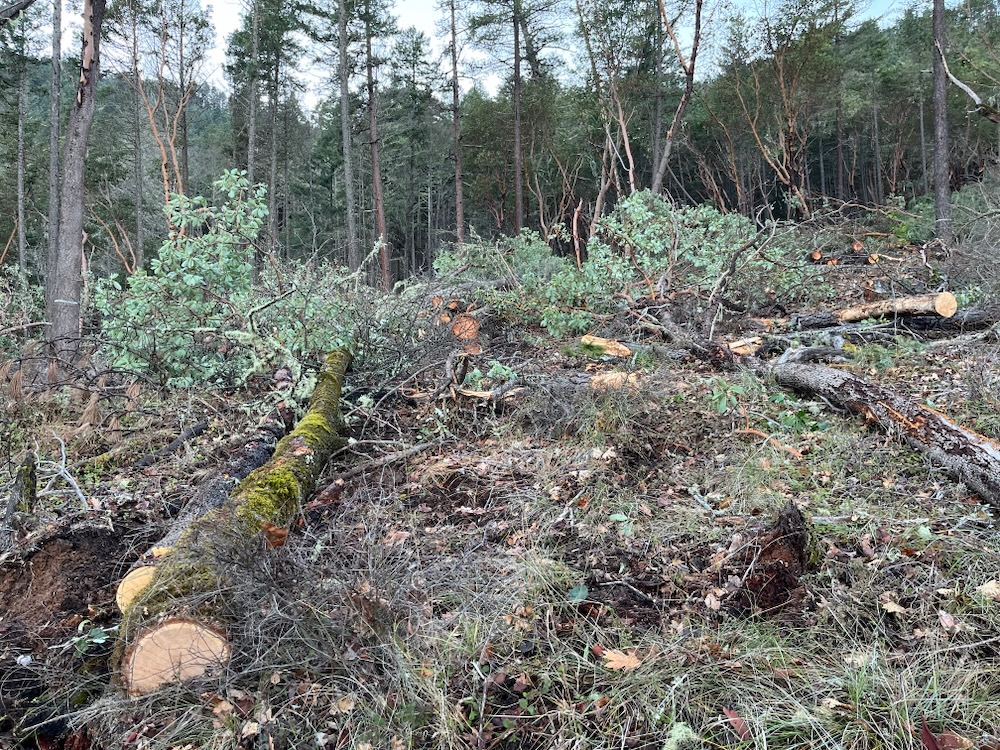
“Retain all hardwood species unless removal is required for safety or operational purposes.” (Ashland SOS EA P. 11)
“The Ashland SOS project proposes to retain healthy living trees, leave snags in proposed units, and promote hardwood species.” (Ashland SOS Decision Record #3 P. 25)
“Hardwood regeneration is important for providing species diversity, varied age classes, and structural layering. Hardwoods will be retained except where operationally infeasible.” (Ashland SOS Decision Record #3 P. 34)
“Reserve all cedar, pine, hardwoods, and Pacific yew in all units as shown on Exhibit A, except where falling is necessary for safety or operational reasons. If such trees need to be cut for safety or operational reasons, retain cut trees in the stand.” (Apple Saws Full Timber Sale Prospectus P. 1 of 29)
Reality #2 – Significant hardwood populations are being felled and removed across the Apple Saws Timber Sale
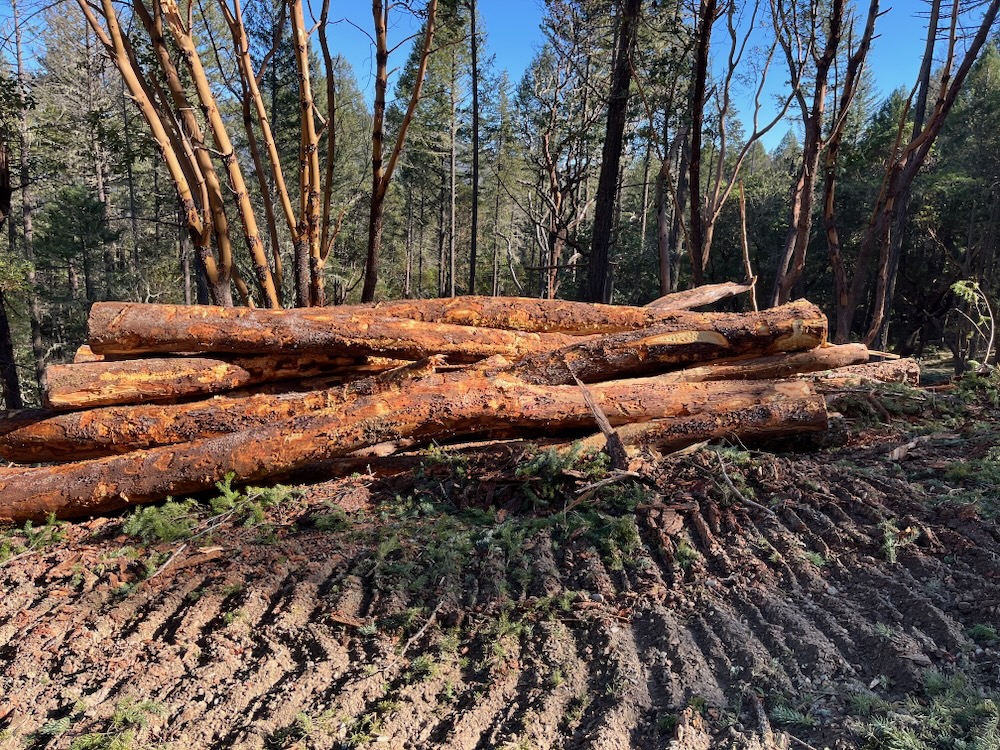
Hardwoods, including at least 80% of the madrone and black oak on site are being felled and removed across the Apple Saws Timber Sale. This includes large mature madrone trees by the thousands, many of which are being felled, yarded to the road, sorted, decked, and hauled off in log trucks despite not being authorized for felling or removal.
The wholesale removal of hardwood trees for firewood was explicitly not allowed under the timber sale contract or BLM NEPA documents. Yet, the systematic removal of hardwoods is occurring throughout the timber sale area.
The felling, yarding and removal of hardwoods for firewood is occurring openly throughout this timber sale, despite the fact that Estremado Logging did not buy the hardwoods and is not authorized to fell, yard or remove them from the site at this scale.
The Apple Saws Timber Sale is completely decimating, rather than “promoting” and “retaining” the hardwood component as the EA, Decision Record, and Timber Sale Prospectus suggest. Additionally, the retention and promotion of hardwoods was required to meet canopy cover, basal area, and Northern spotted owl habitat targets identified by BLM during the planning process.
The removal of hardwoods at scale renders the EA analysis invalid and demonstrates that BLM logging operations dramatically exceed the impacts analyzed, authorized, and disclosed to the public in the applicable BLM documents. The retention and promotion of hardwoods in the Apple Saws Timber Sale is a myth untethered from reality.
Myth#3 – No wet weather logging will occur
“No road construction, landing construction, skid trail construction, road renovation, road reconstruction, road decommissioning, road blocking/barricade construction, rocking, water bar construction, soil ripping, shall be conducted within contract area between October 15th of one calendar year and May 15th of the following calendar year, both days inclusive, or when soil moisture exceeds 25%, as determined by the Authorized Officer.
No ground-based yarding or soil decompaction operations shall be conducted within contract area between October 15th to May 15th, or when soil moisture exceeds 25%.” (Apple Saws Full Timber Sale Prospectus P. 7 of 29).
“Restrict non-road, in-unit, ground- based equipment used for harvesting operations to periods of low soil moisture; generally from May 15 to Oct 15. Low soil moisture varies by texture and is based on site-specific considerations. Low soil moisture limits will be determined by qualified specialists to determine an estimated soil moisture and soil texture” (2016 RMP, p. 183).
Reality #3: – Ground-based wet weather logging and hauling has occurred.
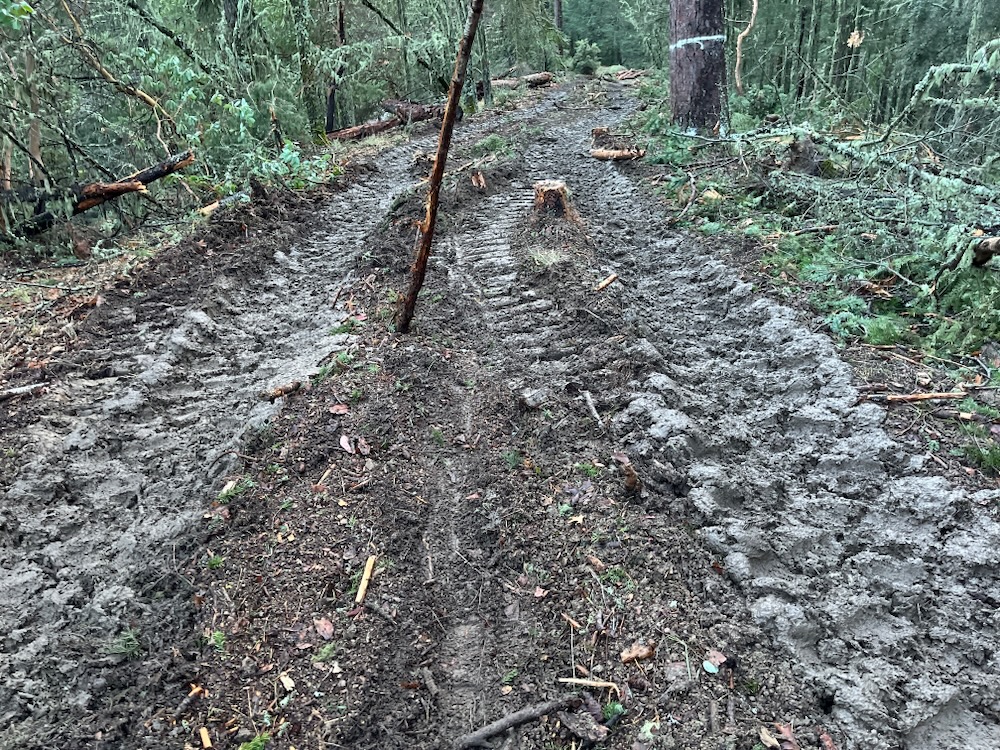
Last winter the BLM allowed wet weather logging to occur (despite ASA’s complaints) until landslides, heavy sedimentation and debris flows occurred in the Boaz Salvage Timber Sale. This winter, in the Apple Saws Timber Sale on Ben Johnson Mountain, Estremado Logging requested a wet weather waiver on December 16, 2025, and BLM immediately authorized that waiver three days later on December 19.
Wet weather logging is generally restricted during the winter months to protect soils, reduce sedimentation into local streams, and mitigate the impact of logging, yarding, and hauling activities. The waiver BLM provided for the Apple Saws Timber Sale allows the logging company to ignore the Project Design Features identified in the BLM’s Resource Management Plan, and the authorizations in the Timber Sale Prospectus that limit wet weather logging and hauling activities from May 15th to October 15th.
However, even this wet weather waiver states, “no work will occur during rain events.” Despite these restrictions crews moved in equipment on Christmas eve and began logging during a rain storm on January 1, 2026. Logging continued in the rain until January 5, 2026 in violation of the Wet Weather Waiver provided by the BLM.
Throughout the timber harvest activities ground-based yarding has created excessive soil damage, deep rutting, heavy soil compaction, damage to coarse downed wood, and the potential for significant surface erosion, and stream sedimentation in nearby seasonal streams. This disturbance also destroys native vegetation and will undoubtedly encourage noxious weeds and non-native annual grasses that can dramatically increase fire risks.
Myth #4 – No ground based yarding will occur in unit 32-7
The Ashland 2025 SOS Decision Record #3 for the Apple Saws Timber Sale identified unit 32-7 as a 50.8 acre unit with the logging method identified as “cable/heli.” (Ashland SOS Decision Record #3 P. 2)
The Apple Saws Timber Sale Prospectus identified unit 32-7 as a 69-acre skyline cable yarding unit.
There is no BLM document either analyzing or authorizing ground-based yarding in unit 32-7.
Reality #4 – The lower half of unit 32-7 was subjected to ground based yarding
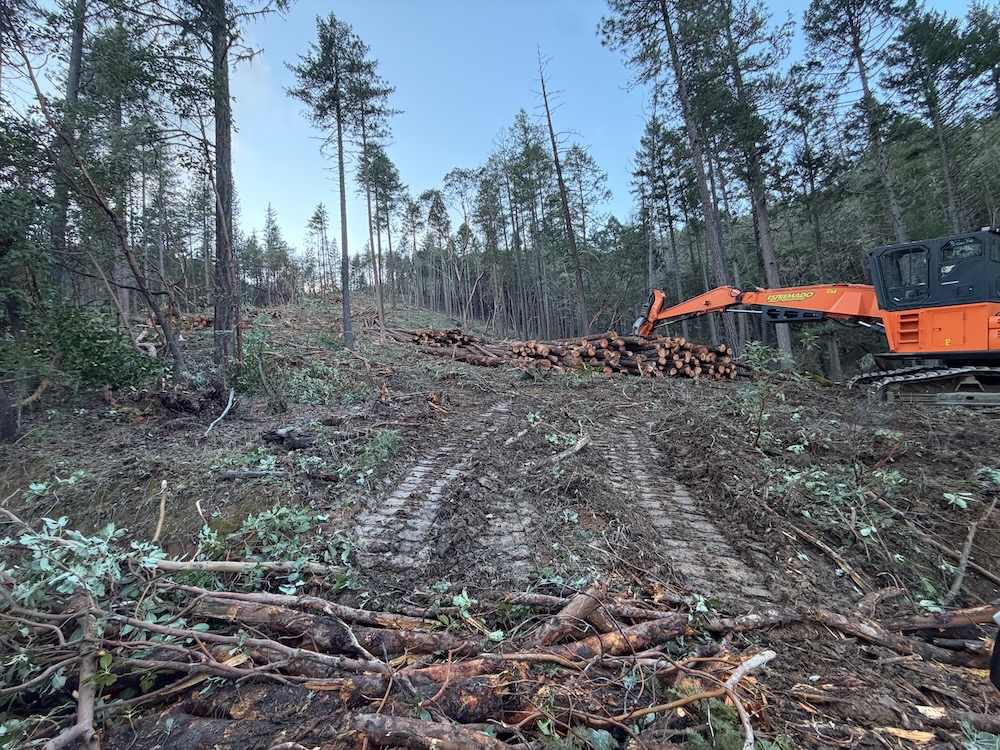
Unauthorized ground-based yarding using a large harvester occurred in unit 32-7 for multiple weeks, including from January 1 to January 5, 2026 during an active rain storm in clear violation of all BLM documents pertaining to this sale.
The unauthorized ground-based yarding also created skid trails likely 4-5 times the size allowed in the Timber Sale Prospectus and on slopes greater than 35%. It also created far more soil damage, compaction and Detrimental Soil Disturbance, damage to vegetation and potential for erosion and stream sedimentation than was allowed in the Apple Saws Timber Sale Decision Record and Timber Sale Prospectus.
BLM was notified of the unauthorized activities and has continued to look the other way, allowing similar activities to occur and has taken no action to address this clear violation of their authorizing documents.
Myth #5 – Logging will not occur in the Inner Zone of Riparian Reserves, and will retain higher retention levels in adjoining Middle and Outer Riparian Reserve buffers
The Ashland 2025 SOS EA identified a 50′ no cut buffer along Riparian Reserves surrounding intermittent or seasonal streams. (Ashland 2025 SOS EA P. 17)
The SOS EA was revised to clarify that retention levels in riparian reserve middle and outer zones must retain at least 30 percent canopy cover and 60 trees per acre, and that only likely or imminent hazard trees may be felled in inner zones, with all other trees retained. (Ashland SOS Decision Record #3 P. 39)
Reality #5 – Logging has occurred in the inner zone of Riparian Reserves in unit 32-7
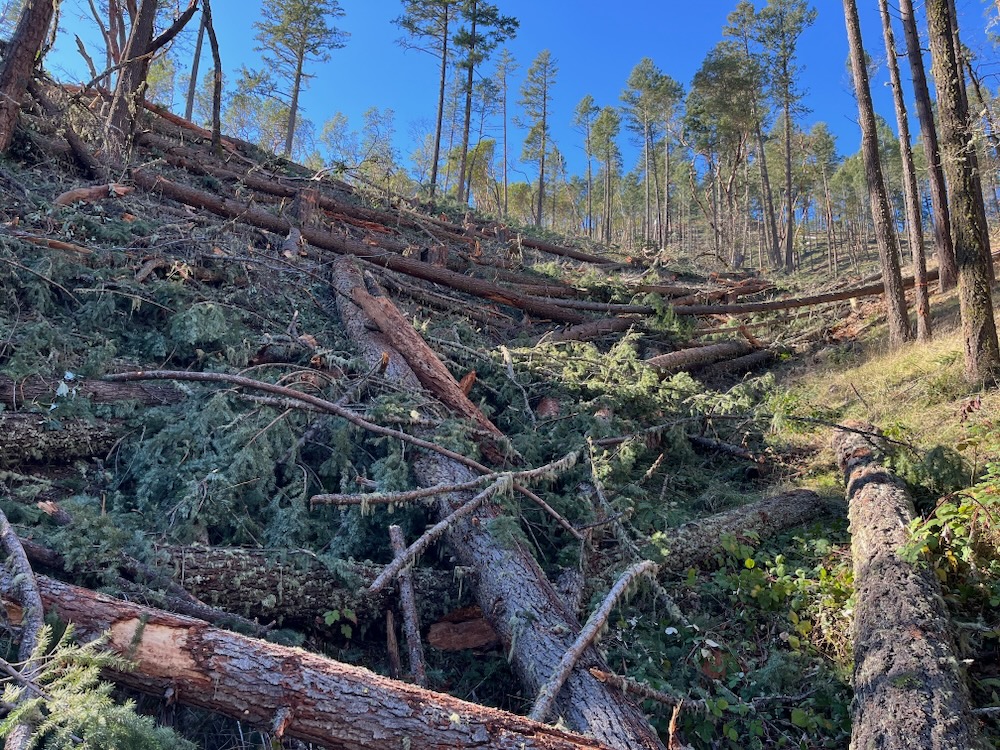
Logging has occurred in the inner zone of the Riparian Reserve in unit 32-7 of the Apple Saws Timber Sale. In fact, a portion of this Riparian Reserve was clearcut in a large group selection opening with virtually all trees felled and cable yarded to the road above.
Additionally, canopy cover and basal area retention targets in adjoining middle and outer Riparian Reserves are also not being met, leading to decreased stream shading, degraded wildlife habitat values, compromised Riparian Reserves and degradation to aquatic habitats.
Myth#6 – New road construction would be limited to segments less than 1/4 mile in length and no new construction was authorized in unit LF-33
“Temporary roads would be limited in length per road segment (< 1⁄4 mile) when accessing units.” (Ashland 2025 SOS EA P. 172)
Additionally, neither the Timber Sale Prospectus nor the Decision Record authorize new road construction in unit LF-33 of the Apple Saws Timber Sale.
Reality #6 – New road segments larger than 1/4 mile have been proposed despite limitations identified in the Environmental Assessment and an unauthorized road was built in unit LF-33
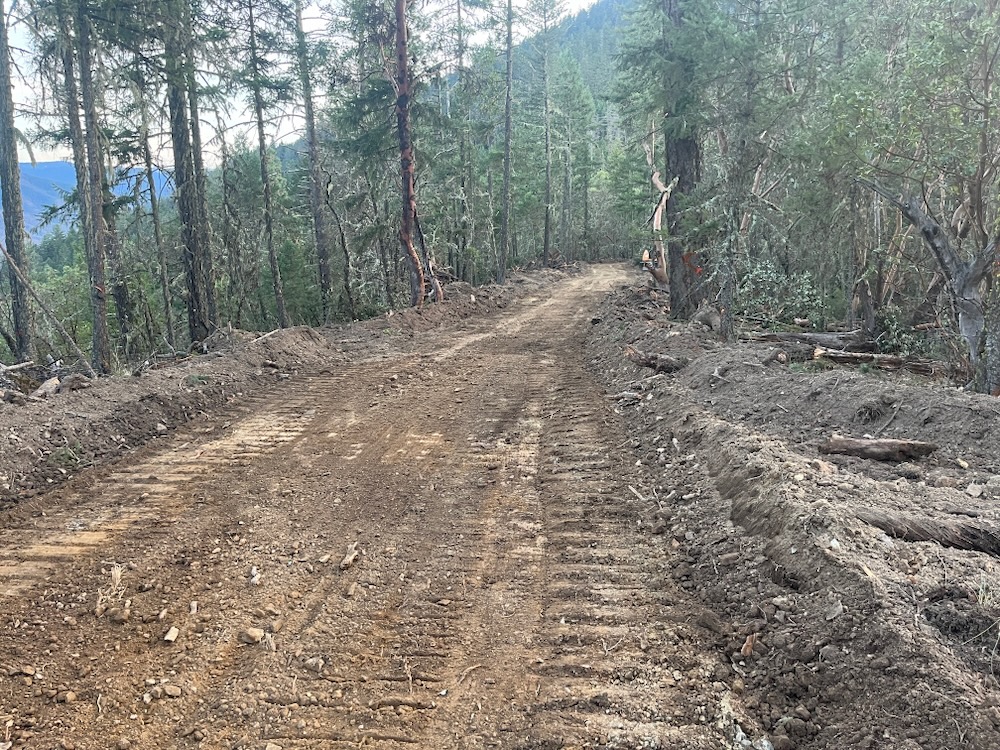
New road segments over 1/4 mile are proposed to access unit 32-1 and would cut across steep slopes, leaving scars on the mountain for decades to come and creating permanent lasting impacts to the viewshed, hydrology, slope stability, and habitat on Ben Johnson Mountain and the surrounding ridges. The new road construction authorized in the Apple Saws Timber Sale includes one contiguous road segment approximately one mile long, and over four times the distance allowed in the EA.
Unauthorized new road and landing construction has also occurred on the ridgeline in unit LF-33. The unauthorized new road in unit LF-33 has been illegally created by logging crews, while BLM looks the other way. This new road segment is approximately 1/4 mile long and was not analyzed or authorized in any of the applicable BLM documents.
Myth #7 – Apple Saws Timber Sale and the larger SOS Project will prevent fires and reduce fire risks
The BLM claims that the SOS Project and Apple Saws Timber Sale are focused on reducing fire risks associated with dead standing trees. The assumption is that excessive dead and dying trees will fall to the forest floor and increase fire risk by building coarse woody debris and large downed trees as surface fuels.
Reality #7 – The Apple Saws Timber Sale will dramatically increase fire risks in all affected forests
Although the project claims to be a “salvage” logging project, the Apple Saws Timber Sale is logging off predominantly living, green stands of mature mixed conifer forest. This logging includes the removal of dominant conifers and hardwood species, as well as significant canopy cover reduction. The science is clear that removing mature forest and replacing it with dense, even-aged, highly flammable, young vegetation and logging slash will dramatically increase fire risks in affected stands.
In 3-5 years, significant woody vegetation will grow up through the logging slash dramatically increasing fire risks. Additionally, significant alterations in habitat will create hotter, drier, more windy habitats with conditions highly conducive to fast moving, high severity fire.
In the case of the Apple Saws Timber Sale, the lands subjected to industrial logging, canopy and large tree removal, heavy ground disturbance, and the associated increase in fire risks also surround residential communities and homes in the Applegate Valley.
BLM has itself concluded that creating openings of the size proposed in the Apple Saws Timber Sale will increase fire risks for 5-20 years; however, we believe it will increase fire risks for far longer than that.
“For the first 1 to 5 years after harvest, these stands would remain a slash fuel type until the shrubs, grasses, and planted trees become established. After the establishment of regeneration, these stands would move into a brush fuel type. Brush fuel types are more volatile and are susceptible to high rates of fire-caused mortality. Stands could exhibit higher flame lengths, rates of spread, and fire intensity. Fires started within these stands could be difficult to initially attack and control. For 5 to 20 years following planting, the overall fire hazard would increase in these stands.” (Clean Slate EA, Fuel Analysis)
The Apple Saws Timber Sale will not make our valley more fire safe, it will regenerate dense, vegetation in areas directly adjacent to homes and residential communities, making them more at risk in the coming fire seasons.
Conclusion
The implementation of the Apple Saws Timber Sale, like the Boaz Salvage Timber Sale before it, demonstrates that BLM regularly builds mitigation measures and restrictive Project Design Features into the environmental (NEPA) analysis, and then relies upon them to make their projects appear benign or even helpful. This myth of BLM benevolence is shattered by the realities on the ground, and by the BLM’s clear refusal to enforce or implement environmental regulations that protect public resources.
The Apple Saws Timber Sale is a tragedy in the making, and we continue to work to stop it. Please contact your elected officials and the Medford District BLM
Take Action!
Tell BLM to stop the logging at the Apple Saws Timber Sale and submit the first logged units to a compliance review.
Tell BLM that community monitoring of this timber sale demonstrates that significant compliance issues have arisen in recent weeks, leading to unacceptable impacts that were not analyzed or authorized in the Ashland 2025 SOS EA, the Ashland SOS Decision Record #3 for the Apple Saws Timber Sale or the Apple Saws Full Timber Sale Prospectus.
Tell BLM that the Apple Saws Timber Sale is sacrificing local habitats, seasonal streams, scenic values, and community fire safety for public land timber production, and private industrial profits. Our public land should be managed for the greatest good, not the greatest greed!
Contact local BLM land managers
Elizabeth Burghard, Medford Area Manager: eburghar@blm.gov
Lauren Brown, Ashland Resource Area Manager: lpbrown@blm.gov
Contact your Elected Officials
Senator Ron Wyden: https://www.wyden.senate.gov/contact
541-858-5122 and 202-224-5244
Senator Merkley: https://www.merkley.senate.gov/connect
541-601-9102 and 202-224-3753