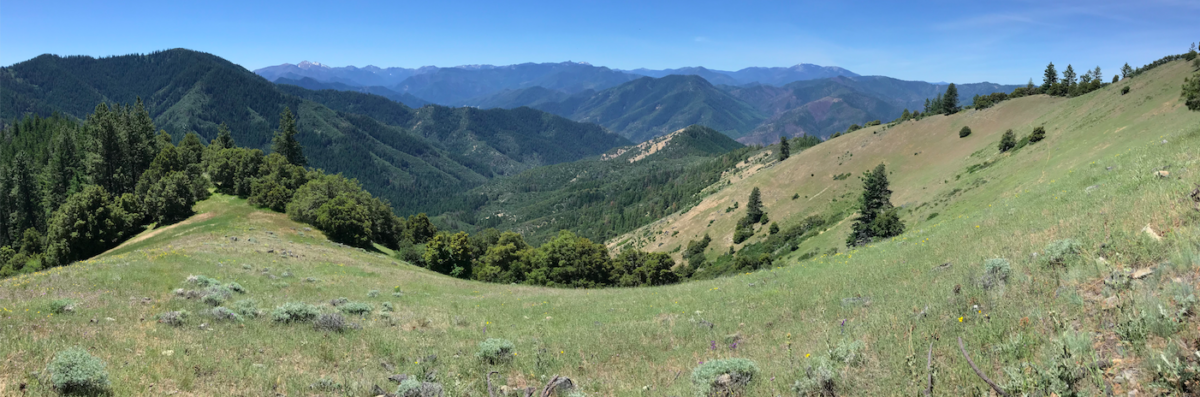
Click on the video above to watch Luke Ruediger’s presentation about the Cedar Flat Project.
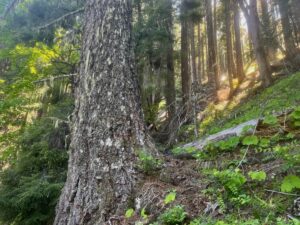
Over the holidays, the BLM released an Environmental Assessment (EA) for the Cedar Flat Project above Williams in the western portion of the Applegate Valley. Originally proposed in June 2024, the project included a significant old forest logging component targeting stands high on the face of Grayback Mountain. Immediately, residents and conservation organizations like ASA pushed back and by January of 2025, the BLM had restructured the project and withdrew numerous of the most controversial old forest logging units.
Pleased by this initial restructuring and the cancellation of these mature and old forest logging units on Grayback Mountain, ASA went out to the field again and found additional old forest logging units on the eastern flank of Holcomb Peak at the headwaters of Bear Wallow Creek, scattered throughout the West Fork Williams Creek watershed and on the summit of Little Sugarloaf Peak.
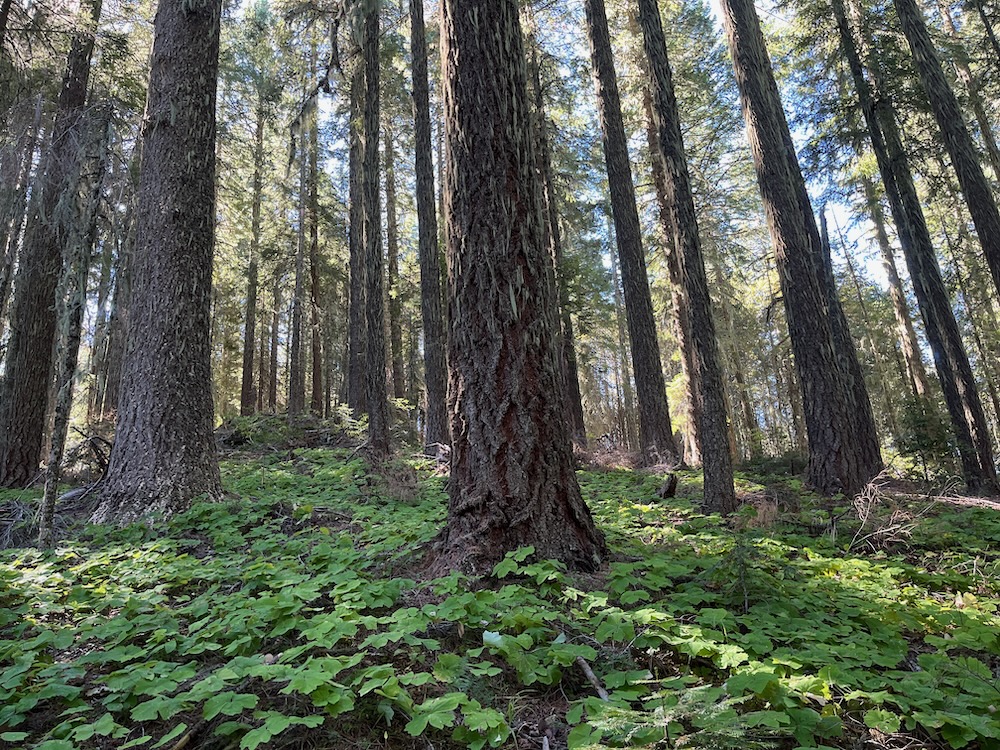
We again made our concerns clear, and BLM responded by withdrawing all Nesting and Roosting habitat for the Northern spotted owl from project units in the Environmental Assessment (EA). This meant that these units of concern shrunk still further, and more of the project became focused on the vast plantation stands found in the area.
With the EA now out for public comment, we have reviewed the appropriate BLM documents and ASA’s is now OPPOSING BLM’s Alternative D, due to the heavy logging prescriptions proposed, and is instead PROMOTING a community alternative we call, Amended Alternative B.
Below are the details of both proposals, followed by talking points and information to help provide substantive comments on the BLM’s Cedar Flat EA.
ASA is Opposing BLM’s Alternative D
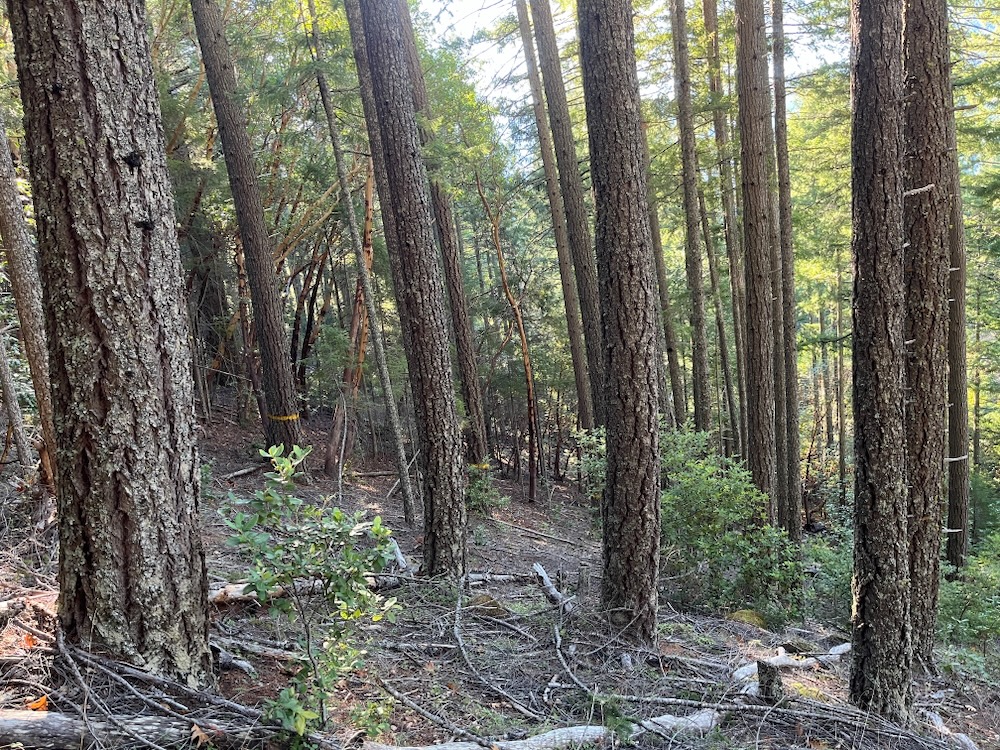
The Cedar Flat Project is proposed in Late Successional Reserve (LSR) forest that was set aside to protect, maintain and enhance old forest habitat for the northern spotted owl. In these areas, the agency must not implement logging prescriptions that “preclude or delay” the development of northern spotted owl habitat for more than 20 years, or are driven by purely economic incentives.
Yet, the evidence in the Cedar Flat Project EA demonstrates that numerous mature and old forest units would be logged in a manner that damages northern spotted owl habitat, and these impacts would be most severe under the BLM’s Alternative D. This alternative proposes the heaviest logging treatments, the removal of the largest diameter trees, the most canopy removal, and the largest “group selection” clearcuts of any proposed Action Alternative in the EA.
Our analysis shows that Alternative D would not only damage northern spotted owl habitat, but it would create the most pronounced impact on local watersheds through significant new road construction and more widespread logging operations. It would also increase fire risks by removing large fire resistant trees, degrading canopy conditions, creating large canopy gaps, and making slopes hotter, drier, more windy, and more fire prone. The removal of canopy will, in turn, regenerate a dense, highly flammable layer of young, even-aged shrubs, young conifers and stump-sprouting hardwood species increasing fire risks and encouraging more intense, fast moving fires.
Alternative D allows for the removal of trees up to 36″ DBH for conifers and 24″ DBH for hardwood trees; the retention of as low as 30% canopy cover; the downgrading or removal of foraging and dispersal habitat for the northern spotted owl; group selection logging clearcuts up to 2 acres in size and on up to 25% of each unit, and for up to 5.1 miles of new road construction.
ASA is Promoting Amended Alternative B
The Amended Alternative B was created by merging the BLM’s Alternative B and C, and amending these alternatives to make them more consistent with LSR standards. This action alternative has been fully analyzed in the Cedar Flat EA, has been shown to meet the purpose and need, and is currently decision ready.
Amended Alternative B would withdraw all mature and old forest logging units and limit commercial logging treatments to relatively young plantation stands under 70 years of age, where thinning trees may have more benefit. It proposes a 24″ DBH limit for conifer removal and 10″ DBH limit for hardwood trees. It focuses non-commercial thinning adjacent to homes and communities, and builds no new roads, while requiring the retention of at least 50-60% canopy cover in Douglas fir and true fire plant communities, and as at least 40% canopy cover in ponderosa pine stands.
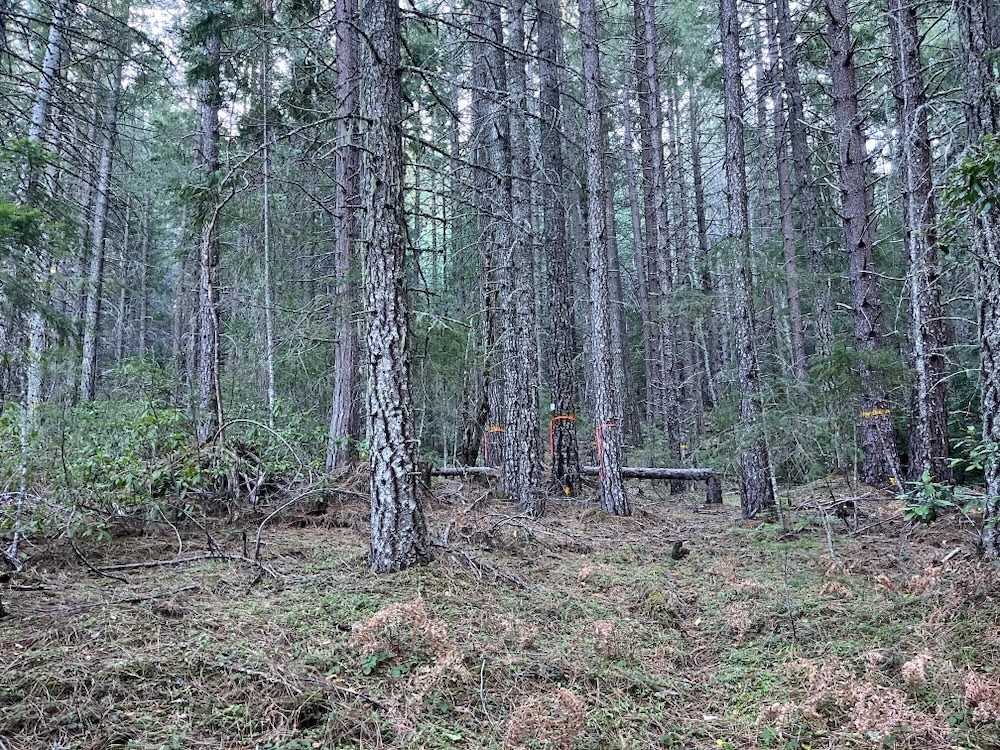
Additionally, our Amended Alternative B proposal would not create openings in the canopy or utilize group selection logging techniques. Instead, openings would be created through natural process and prescribed fire, allowing for a more natural, irregular patch mosaic.
Cedar Flat Project Public Comments are Due January 25, 2026
Use your voice for the forests of Williams Creek and provide substantive public comments on the Cedar Flat Project. Below are talking points to help inform your comments and support a healthy environment in the Williams Creek watershed
- Support ASA’s Amended Alternative B which promotes plantation thinning, retains large diameter trees, retains adequate canopy cover, does not create canopy gaps, and would both enhance habitat values in heavily altered plantation stands, and reduce fire risks.
- Oppose Alternative D and its heavy commercial logging proposal. Alternative D removes too many trees, removes too much canopy, creates too many canopy gaps, and will both impact habitat values and increase fire risks if implemented.
- LSR forest is intended to promote, enhance and maintain northern spotted owl habitats. All northern spotted owl habitat designations should be maintained and units currently proposed in mature or old forest habitats should be canceled, including units 30-01, 12-0, the south half of 23-01, 03-03, 01-01, 21-01, 21-02, 25-01, 34-01, 34-02, & 34-03.
- Build no new roads, temporary or permanent. This area is already suffering from extreme road density, the associated watershed impacts, and Port Orford Cedar Root Rot, which is being spread along roads throughout the planning area.
- Promote Late Successional Reserve (LSR) values by retaining large trees over 24″ diameter, retaining canopy cover levels sufficient to maintain northern spotted owl habitat and suppress shrub/understory fuel development, and allowing logging treatments to occur only in plantation stands under 70 years of age.