
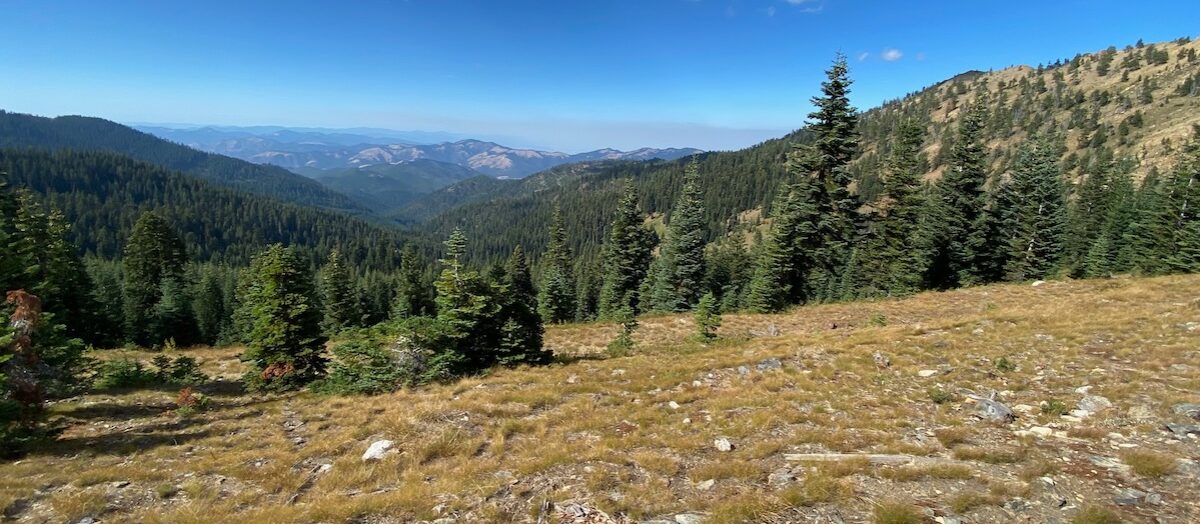
A Flurry of BLM Timber Sales in the Applegate Valley

It has become customary in the Applegate Valley for the BLM to spoil our holiday season by putting out timber sales just before and during the holidays. This year is no exception, as the BLM has approved a series of timber sales that threaten the forests surrounding our homes and communities, including the BLM’s latest, the Thom Bone Timber Sale, that is slated to be auctioned off on December 18th.
Authorized on September 25, 2025 under the larger Ashland 2025 Strategic Operations for Safety (SOS) Environmental Assessment (EA), the Medford District BLM initially auctioned off three timber sales as part of the larger SOS Project, centered around Sterling Creek, Woodrat Mountain, Ben Johnson Mountain, along the East Applegate Ridge Trail, and in the Wellington Wildlands at the headwaters of China Gulch just one month later.
Two of these timber sales sold to the highest bidder, including the Apple Saws Timber Sale above Cantrall Buckley Park and on the face of Ben Johnson Mountain, which sold to Estremado Logging from Gold Hill, and the Holcomb Hollow Timber Sale on Woodrat Mountain and Sterling Creek, as well as along the beloved East Applegate Ridge Trail. The Holcomb Hollow Timber Sale sold to local loggers, Parker Excavation and Forestry, and together these timber sales will be impacting the forests, fire safety and viewsheds of the Ruch and Sterling Creek areas, and along the extremely popular East Applegate Ridge Trail.
As if that was not enough, on November 18, 2025 the BLM announced the approval of the Thom Bone Timber Sale, and almost immediately put this timber sale up for auction to the BLM’s timber industry partners, announcing an auction coming up on December 18, 2025.
Thom Bone Timber Sale
Watch ASA’s video about the Thom Bone Timber Sale, just click on the video above.
The Thom Bone Timber Sale consists of 530 acres of logging treatments, including 284 acres of “unit” or area “salvage” treatments and 246 acres of “linear” treatments along ridges and roads in the Thompson Creek watershed. Creating an estimated 8.9 million board feet of timber, and removing trees that have an average of 18.1″ diameter at breast height, the logging proposed in the Thom Bone Timber Sale is neither focused on dead and dying trees or small diameter fire prone trees as the BLM has previously suggested. In fact, the BLM would log 24,083 trees, while retaining only 5,139 trees, the equivalent of only 9.7 trees per acre.
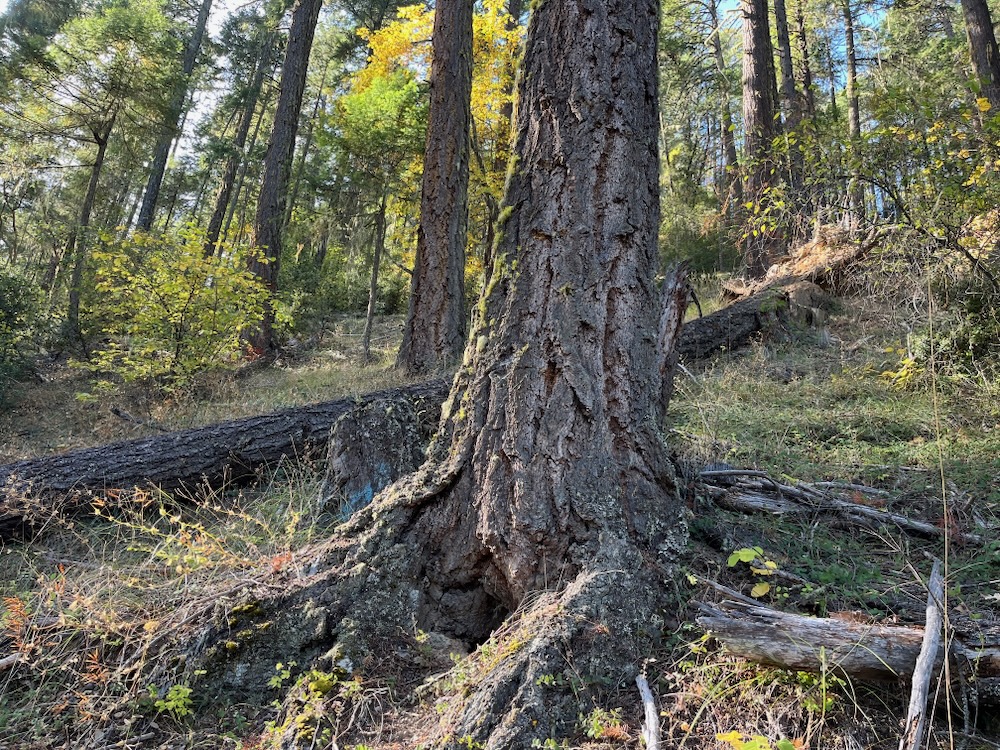
The Thom Bone Timber Sale, just like the Apple Saws and Holcomb Hollow Timber Sales, proposes logging in a variety of habitats, including both stands with significant levels of beetle induced mortality and stands of living, green forests that demonstrated resilience and vigor, by surviving recent beetle mortality events.
The project calls for logging stands with as little as 10% mortality, meaning they could log forested stands where 9 out of 10 trees survived the recent droughts and beetle mortality events. The BLM wants to log the resilient survivors.
According to the BLM’s Thom Bone Timber Sale Prospectus, the agency also intends to log off 82.5% of the existing trees in the timber sale. The result would be to create far more mortality through logging than the previous beetle mortality events, leaving only a few scattered trees where a forest once stood.
Although the BLM claims in the Ashland 2025 SOS EA that the Thom Bone Timber Sale is removing only dead and dying trees, the Timber Appraisal Summary used to described the project to potential timber industry purchasers specifically lists all volume as “green” tree logging, rather than a “salvage” harvest. This same document also discloses that all 530 acres proposed for logging are being characterized as “regeneration” harvest units, meaning the existing overstory trees will be largely removed, triggering a new “cohort” or generation of young, highly flammable vegetation.
Increased Fire Risks
By removing these large trees and mature closed forest canopies with relatively cool, moist stand conditions, and replacing them with the hotter, drier conditions characteristic of BLM logging units, fire risks will dramatically increase. This transition will create higher surface temperatures, higher surface wind speeds, drier fuels, and significantly more dense, young, even-aged, and highly flammable vegetation, mixed with the logging slash of the BLM logging units.
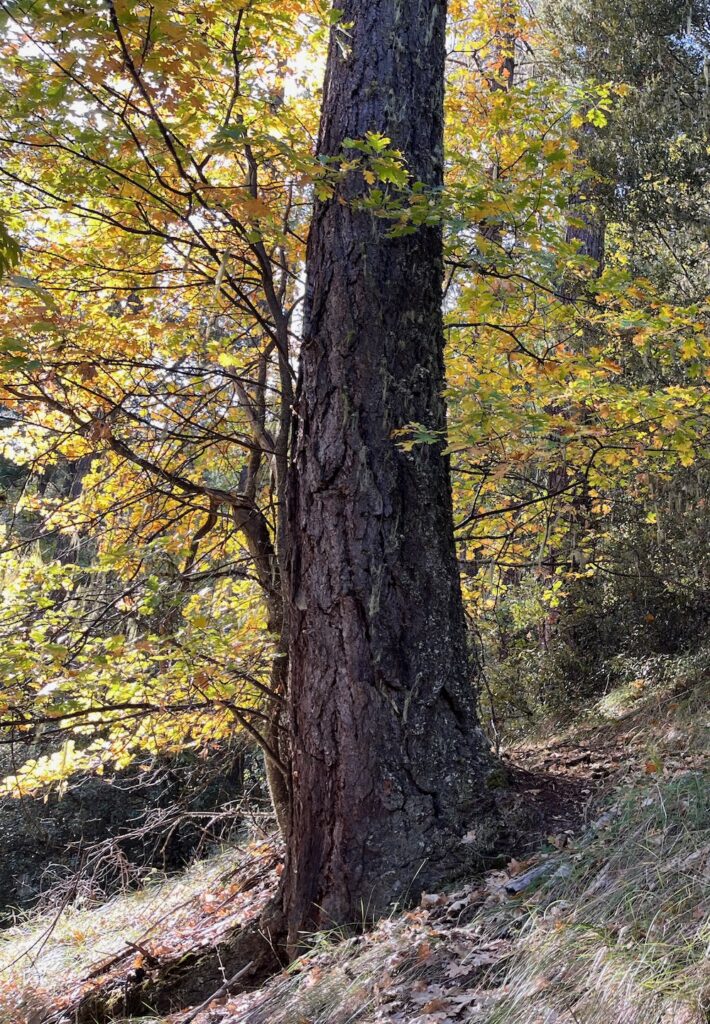
According to BLM’s own analysis in previous timber sales, this transition from closed forest to early seral post-logging vegetation represents an increase in fire risks for extended periods of time. “For the first 1 to 5 years after harvest, these stands would remain a slash fuel type until the shrubs, grasses, and planted trees become established. After the establishment of regeneration, these stands would move into a brush fuel type. Brush fuel types are more volatile and are susceptible to high rates of fire-caused mortality. Stands could exhibit higher flame lengths, rates of spread, and fire intensity. Fires started within these stands could be difficult to initially attack and control. For 5 to 20 years following planting, the overall fire hazard would increase in these stands.”
Although we believe this description above significantly underestimates the amount of time these logging treatments will increase fire risks, the influence on severity, spread and resistance to control has been confirmed in numerous scientific studies conducted across the West. Regeneration or clearcut logging, as proposed by the BLM in the SOS Project has many impacts, including a dramatic increase in fire risks.
The Impact of Salvage Logging
Although large portions of these timber sales are living, green stands that survived recent drought and beetle mortality events, in other locations stands with significant tree mortality are also being targeted for logging. This would remove what scientists call biological legacies, including snags and future downed logs that are important in building forest complexity and maintaining late successional habitat conditions on both the individual stand and landscape scale.

These stands are more than just dead trees, they are habitat for innumerable species, they play a significant and important role in maintaining biodiversity, they store carbon, add structure to regenerating forests, and fall to the forest floor adding carbon to forest soils, retaining moisture on the landscape, stabilizing slopes, enhancing stream habitats, and supporting mycorrhizal associations necessary for the regeneration of conifer forests. Following logging operations all these values will be impacted and the biological legacies they depend upon will be diminished for decades to come.
Residual hardwoods and unaffected conifers within these stands also support heterogeneity, biodiversity and genetic resistance to drought and beetle mortality; however many of these same trees are proposed for logging in the BLM’s salvage timber sales. Hardwoods and non-target species like madrone, black oak, white oak, or live oak are often damaged beyond repair during logging, tree felling, and skyline yarding operations.
No matter the disturbance agent, the salvage logging of natural processes like wildfires and beetle mortality events has profoundly negative consequences for wildlife, for future wildfire behavior and effects, for soils, for watersheds, for the maintenance of biodiversity, and for the regeneration of forest habitats in wake of these natural disturbance agents. Mortality is part of the natural process; it produces biological legacies and biodiversity, and sustains numerous vital biological inputs to soils, streams, wildlife habitats and forest complexity that provide benefits for hundreds of years into the future. However, these same trees and snags are being logged for short-term industry profits and to satisfy BLM’s insatiable appetite for public land timber sales.
Impacts to Late Successional Reserve habitats
Ironically, the Thom Bone Timber Sale is located in a large block of Late Successional Reserve (LSR) forest habitat, where forests were set aside for the development of old forest characteristics and Northern spotted owl habitat. Because of this focus, both “salvage” logging and “regeneration” harvest are prohibited outside rather narrow exemptions surrounding public safety.
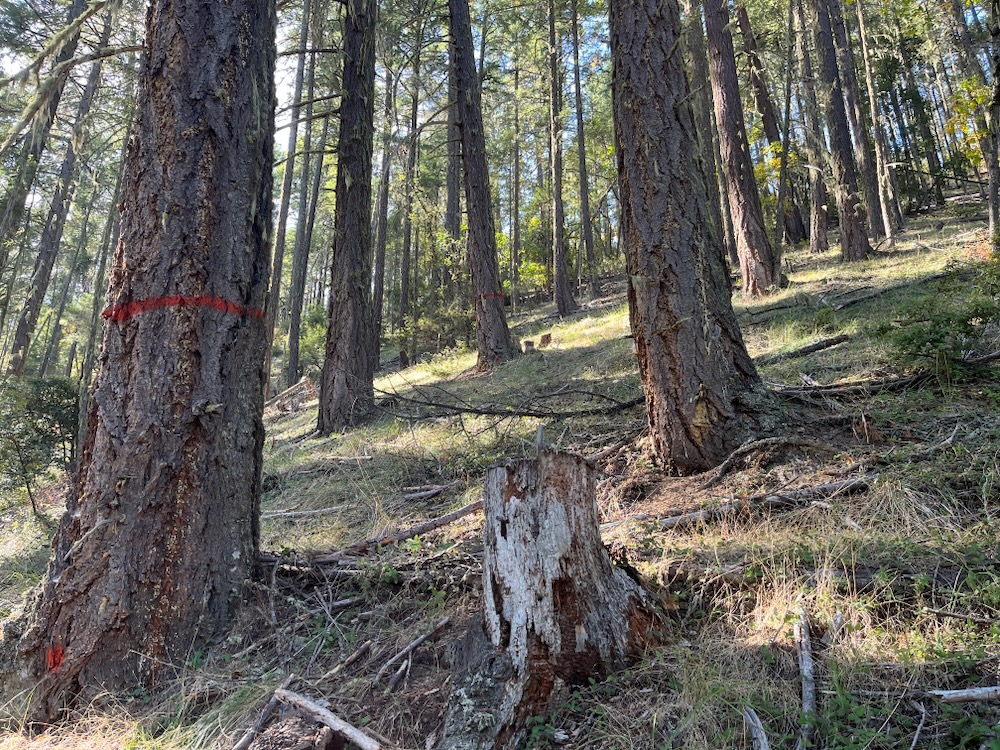
Regeneration logging and “salvage” logging as proposed in these timber sales will preclude the development of late successional forest habitat characteristics for more than 20 years, and the heavy handed LSR logging units proposed in both the Apple Saws and Thom Bone Timber Sales are direct violations of the BLM’s 2016 Resource Management Plan. These treatments have more to do with the BLM’s unending desire to increase timber production, than the maintenance, enhancement and long-term recruitment of mature and old forest habitats as the LSR designation intends.
Economic and Scenic Impacts
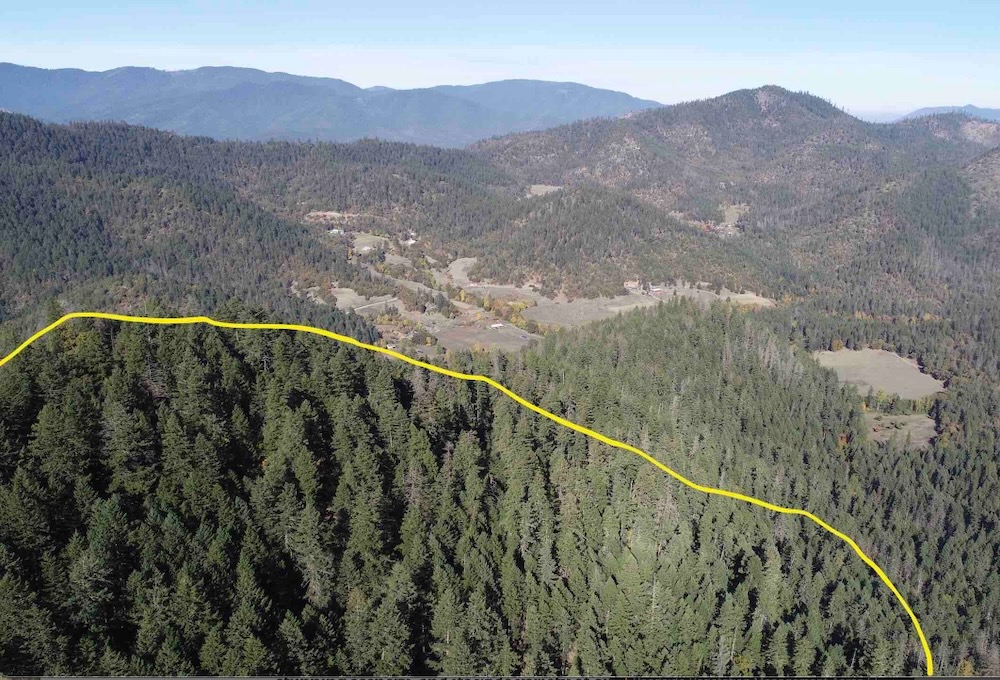
It is the beauty of this place that defines it, and in turn supports our local economy. Local residents are filled with pride and dedication to this spectacular place, while visitors are often blown away by the diversity of the landscape, its stunning scenery, and its wide variety of outdoor recreational opportunities.
Known for its hiking, mountain biking, and wineries, the area is also great for backpacking, boating, camping, swimming, paragliding, trail running, botanizing, bird watching, recreational backcountry driving,and other outdoor activities.
The Applegate’s spectacular quality of life is directly tied to the environment of the surrounding public lands and the recreational opportunities that attract visitors, residents and small businesses that support the community and local economy, which often depend on an intact natural environment in the region to thrive. For example, public lands and public streams keep cold water pouring into the Applegate River during the summer months, and contribute irrigation for our local farms, vineyards, ranches and homesteads. Additionally, the beautiful, largely unspoiled scenery attracts hikers, mountain bikers, wine aficionados, residents, tourists and others to our region.
The timber sales currently proposed by the BLM would damage scenic values throughout large portions of the Applegate Valley, spoiling the area’s spectacular viewshed, unique natural beauty, intact environments, and outdoor recreational activities. BLM lands surround many of the homes, vineyards, farms, ranches and communities here in the Applegate and people often come to the region specifically to enjoy the scenery it provides and the natural beauty of the place.
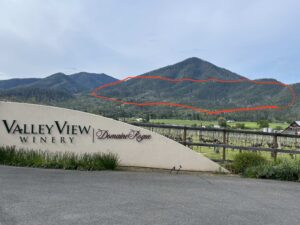
Imagine the mountains of Sterling Creek, above Cantrall Buckley Park, on Woodrat Mountain, and Ben Johnson Mountain, along the East Applegate Ridge Trail, and all around Ruch scarred with clearcuts, stripped of greenery, and converted into regenerating stump fields. That is the impact of BLM “salvage” logging in our valley and the cumulative impact of the SOS Project.
Together the Thom Bone, Apple Saws, and Holcomb Hollow Timber Sales would leave the lasting scars of logging and greed across the mountains of the Applegate, degrading viewsheds, damaging habitats, impacting water quality in nearby streams, spreading non-native and noxious weed species, and threatening many of our neighbors with significantly increased fire risks adjacent to homes in the Applegate Valley. The Trump Administration has promised an increase in logging on federal lands, and in the Applegate Valley, this is what that increase looks like: barren slopes, landslides, increased fire risks and significant impacts to the scenic character of our landscape.
Please help Applegate Siskiyou Alliance oppose the SOS Project and the numerous timber sales the BLM has approved under it.
1) Make a donation
Donate to ASA to support our work challenging these timber sales, and our work to SAVE APPLEGATE FORESTS!
https://donate.applegatesiskiyou.org/donate
2) Help organize.
Help us organize our community against increased BLM logging, and work with us to oppose the renewed push for clearcut logging across the Applegate Valley in the SOS Project.
3) Get educated on this issues.
Start out by reading this article titled “Removing dead trees will not save us from fast moving fires”
4) Contact your elected officials and ask them to oppose these sales.
https://www.wyden.senate.gov/contact
https://www.merkley.senate.gov/connect/
5) Contact the BLM
Demand that the Holcomb Hollow, Apple Saws, Chopper Styx and Thom Bone Timber Sales be withdrawn due to unacceptable impacts to wildlife, to Late Successional Reserve forests, to Riparian Reserves, to the spectacular East Applegate Ridge Trail and Wellington Wildlands areas, and to our community’s fire safety. Both the logging of mature, living stands and the logging of dead standing trees will degrade habitat values, encourage young, highly flammable tree and shrub development, increase fire risks, damage scenic values and impact our community and economy.
Medford District Field Manager, Elizabeth Burghard: eburghar@blm.gov
6) Go out and see the timber sales for yourself.
-Drive the Cantrall and Ben Johnson BLM access roads above Cantrall Buckley Park. The paved road will lead through numerous proposed logging units in the living, green forest on BLM lands.
-Walk the East Applegate Ridge Trail. From the upper trailhead walk about halfway out the trail to the rock outcrops overlooking Ruch. Shortly after entering the trees you will walk through proposed logging units. Additional units are located on the slopes across from the trail as you drop down into Highway 238, and on the north slope of the ridge on the upper portion of the lower road segment. Units are mostly living stands with some patches of recent beetle mortality.
-Drive the Woodrat Mountain access road west from the summit on Sterling Creek Road. You will enter proposed logging units as soon as you reach BLM lands. These units are living, green forests adjacent to rural residential property on Sterling Creek Road.
-Drive up the west face of Woodrat Mountain by turning east off Highway 238 on Bishop Creek Road. Turn right onto the Squires Peak Road leading to the lower Woodrat Mountain Paragliding sites. This road will pass through units with significant mortality. Turn right onto road 38-2-23.1 and follow it through proposed units with a mixture of dead standing snags and living, green trees.